
Last updated November 22, 2026
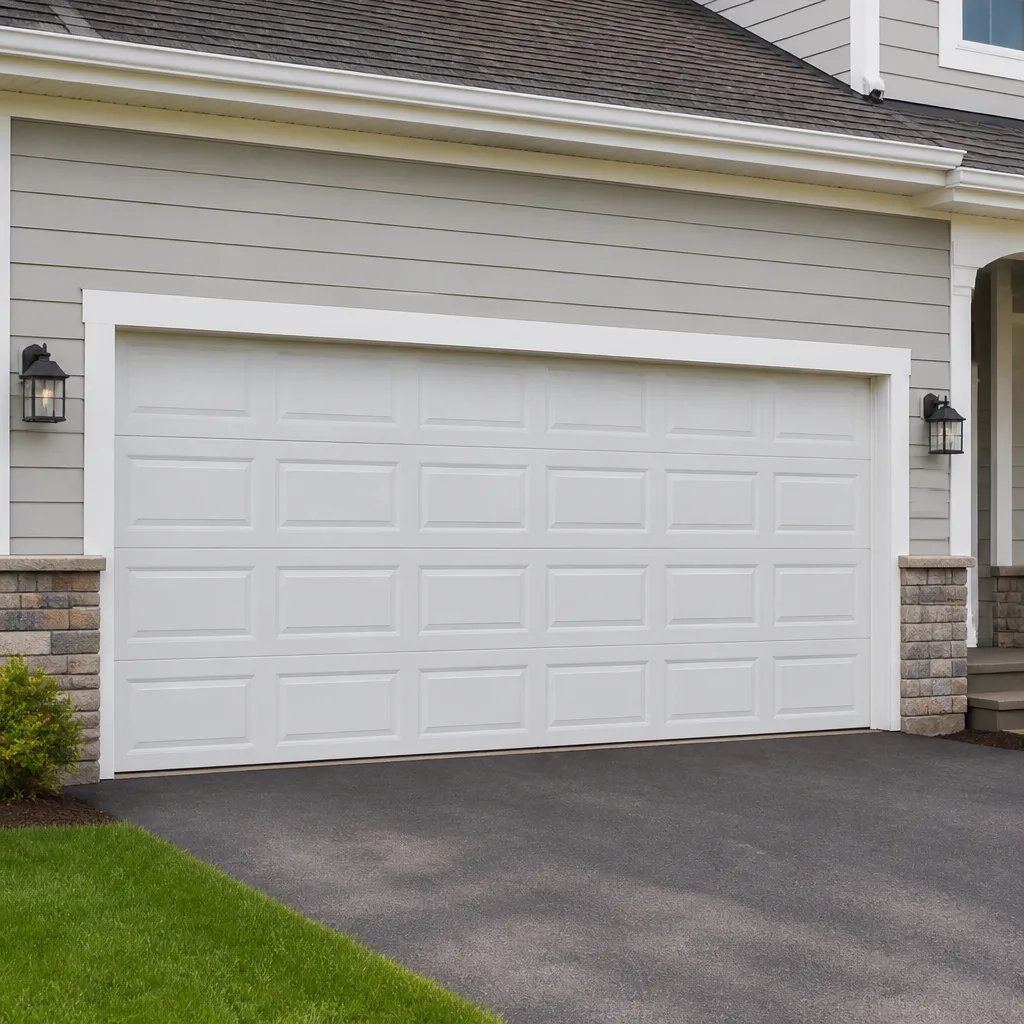 Raised-panel steel
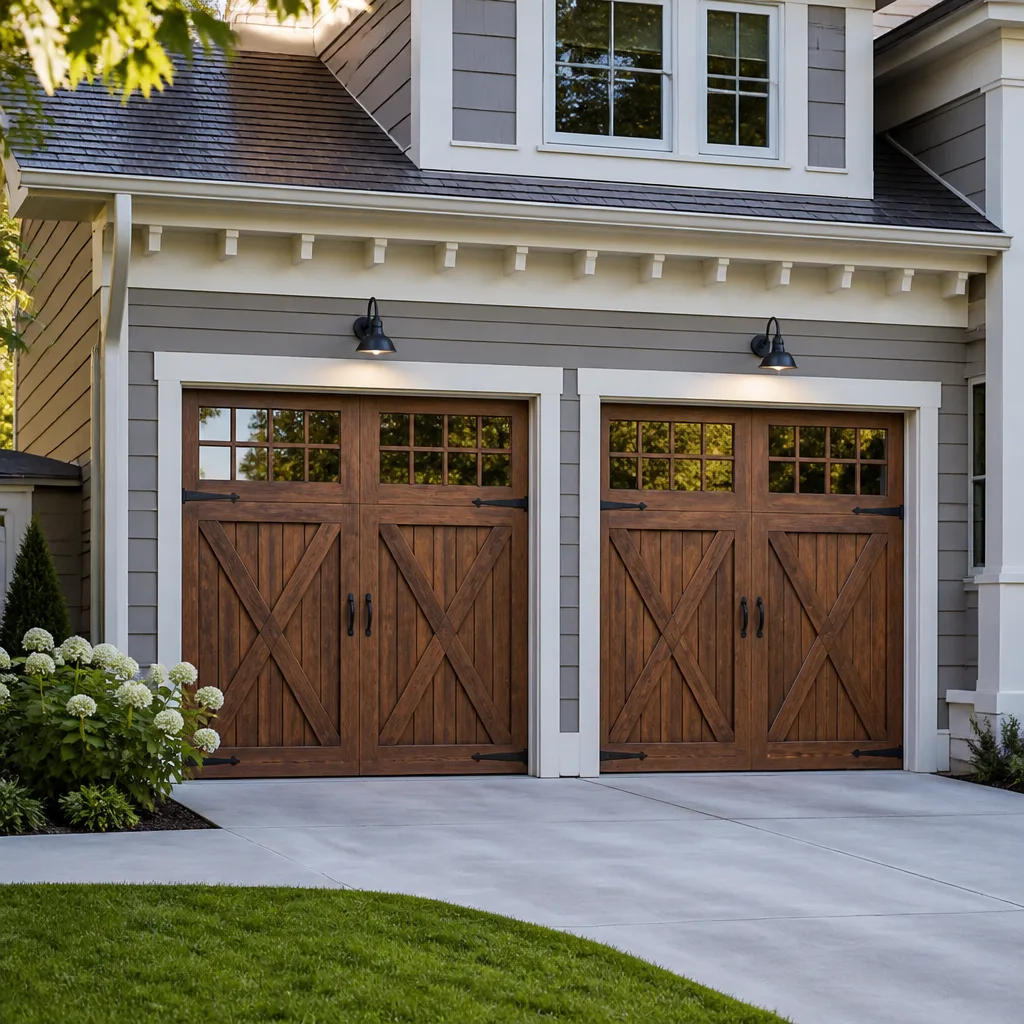 Carriage house
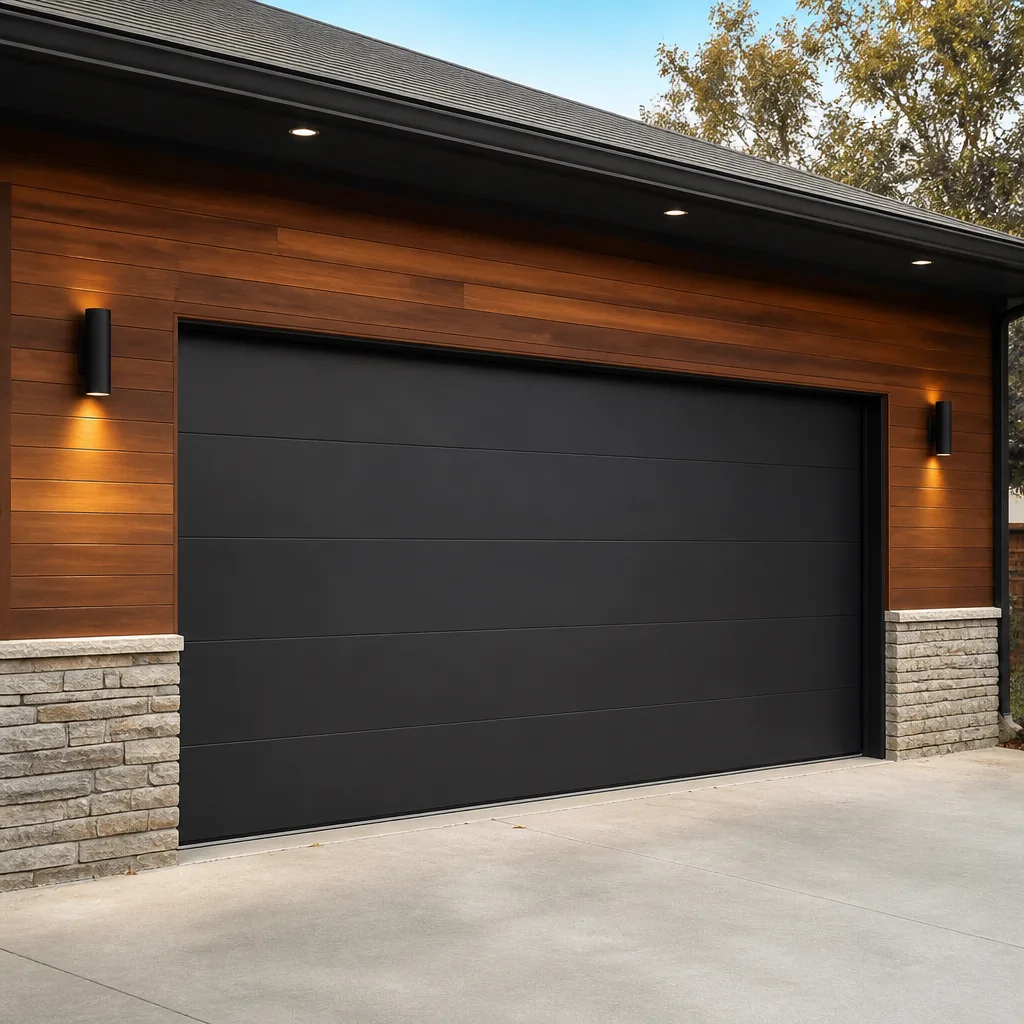 Modern flush
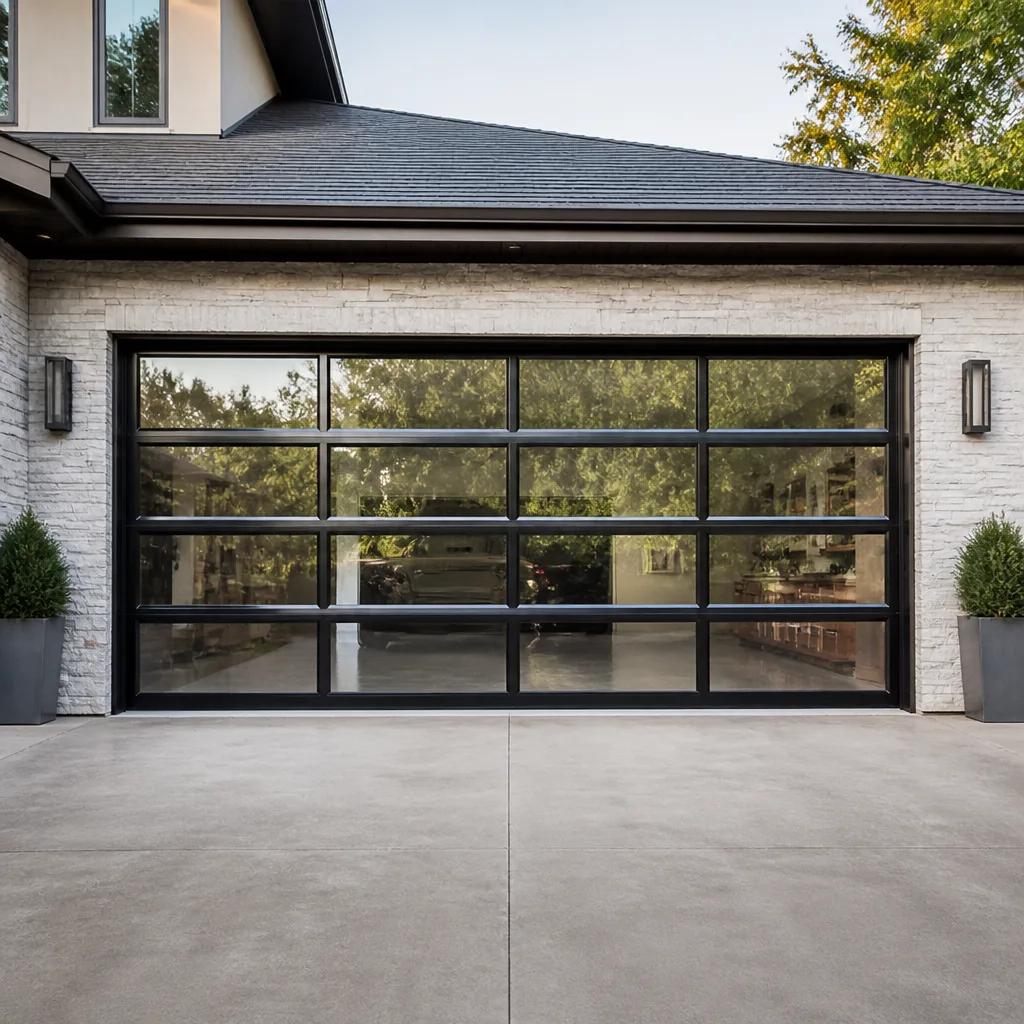 Full-view glass
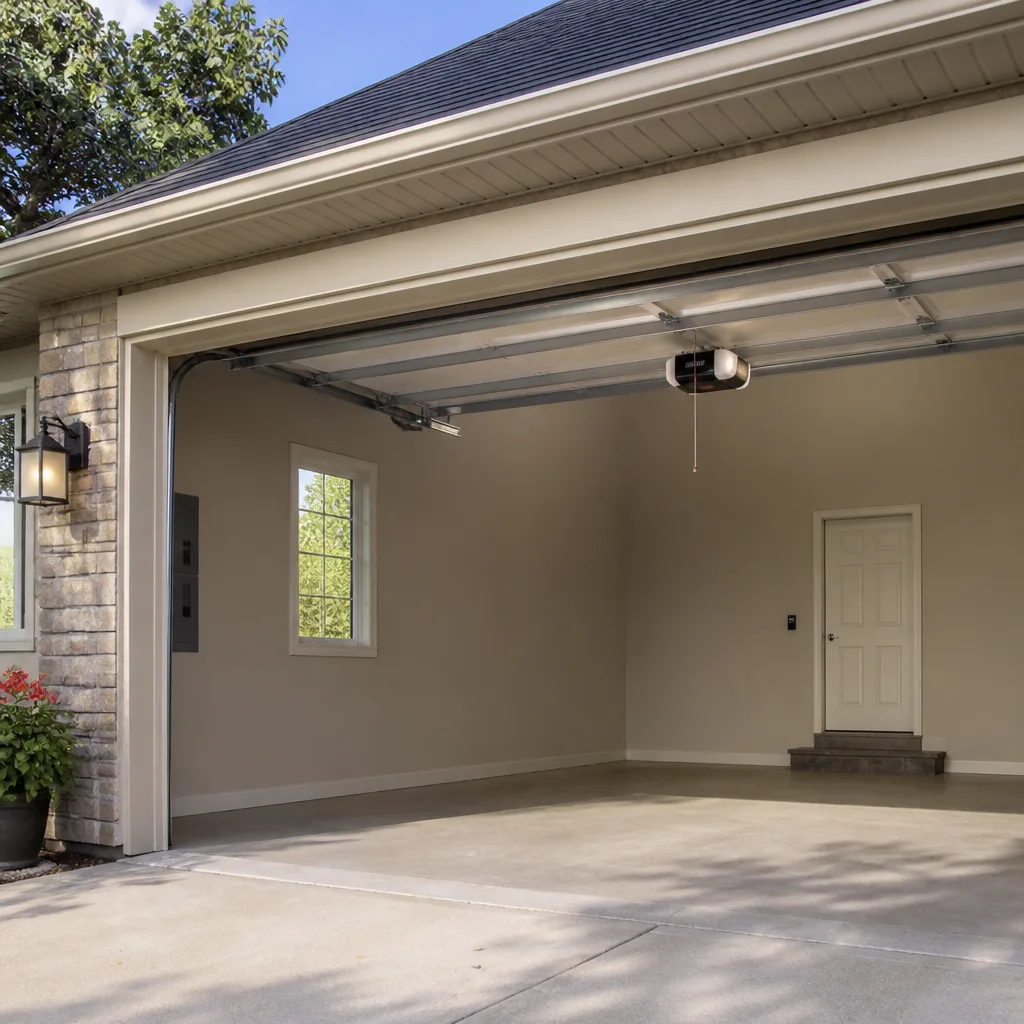 LiftMaster openers
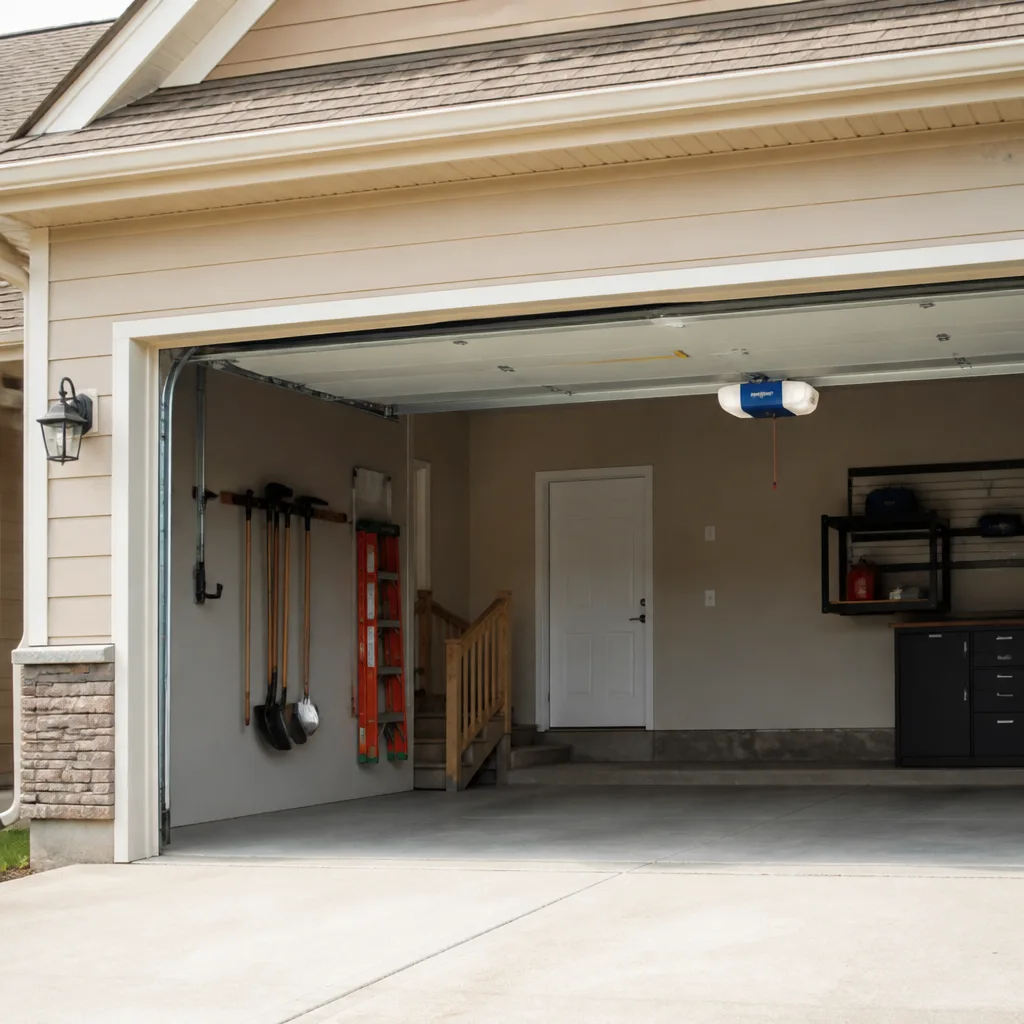 Chamberlain openers
Full 25-point door and opener safety check with every visit - springs, cables, rollers, tracks, and your LiftMaster or Chamberlain opener included
You get a price before we start. It does not change when the pro arrives.
Get your free estimateHow to Hire a Garage Door Contractor in South Hill: A Step-by-Step Guide
Washington State doesn’t require a specialty license to work on a garage door. That’s the part most homeowners never hear. The person who shows up to replace a torsion spring carrying roughly 150 pounds of stored tension may hold nothing more than a general contractor registration – and that registration doesn’t test for garage door knowledge at all. So the real question isn’t “are they licensed?” It’s “how do I tell a genuine specialist from a handyman who added ‘garage doors’ to the truck magnet last spring?” This guide gives you the interview framework, the five technical questions, the review-reading method, and the estimate checklist to answer that for yourself. We’ll walk through it the way we’d walk a neighbor through it in South Hill.
Quick Answer
To hire a garage door contractor in South Hill, verify their Washington Labor & Industries registration and insurance, then ask five specific technical questions about spring cycles, out-of-plumb doors, brand diagnostics, opener compatibility, and torque tooling. Get a written, itemized estimate before any work starts, and treat vague “tune-ups” and unusually cheap spring quotes as red flags. The framework below walks each step in order.
Styles & brands we work with
- Raised-panel steel
- Carriage house
- Modern flush
- Full-view glass
- LiftMaster openers
- Chamberlain openers
Table of Contents
- What Washington Licensing Actually Covers (and Doesn’t)
- How to Verify a Contractor in South Hill Before You Call
- Five Technical Questions That Expose Real Expertise
- South Hill Red Flags in a Garage Door Quote
- How to Read Reviews Beyond the Star Rating
- What a Legitimate Written Estimate Must Include
- Which Line Items Are Negotiable and Which Aren’t
- Why Springs Deserve a Dedicated Specialist
What Washington Licensing Actually Covers (and Doesn’t)
Washington State classifies garage door work under general construction trades, not a dedicated specialty license. That means the contractor’s credential – typically a general contractor registration with the Department of Labor & Industries – confirms they can legally contract for construction work and carry required insurance. It does not confirm they’ve ever touched a torsion spring, adjusted a counterbalance cable correctly, or diagnosed a LiftMaster Logic board fault.
Here’s the honest split of what those credentials do and don’t cover:
- What L&I registration confirms: the contractor is registered to do business in Washington, carries required liability and workers’ comp coverage, and is subject to consumer protection rules.
- What it doesn’t confirm: garage door specialty training, brand-specific diagnostic ability, knowledge of spring cycle ratings, or safe torque procedures.
- What to look up yourself: the contractor’s registration status and expiration on the L&I website, plus a certificate of insurance naming their general liability coverage – request it directly, don’t accept a verbal yes.
In South Hill, where a lot of homes sit on sloped lots along the plateau above Puyallup, garage doors take a beating from wind-driven rain and seasonal temperature swings through the Cascades foothills rain shadow. Doors that were installed square can drift out of plumb over a decade of that. A registered generalist may not recognize the symptom. A specialist does. Before you even dial a number, cross-check our own Garage Door Repair South Hill service scope against what you’re asking – if the job falls outside it, that’s your signal it needs a different kind of trade.
How to Verify a Contractor in South Hill Before You Call
Verification is fast. Do it before the truck pulls into your driveway, not after.
- Look up their L&I registration. Search the contractor’s legal business name on the Washington Department of Labor & Industries site. Confirm the registration is active and the expiration hasn’t lapsed.
- Ask for a certificate of insurance. A legitimate contractor emails it without fuss. Request both general liability and workers’ comp. If they can’t produce it, stop there.
- Ask which brands they’re factory-familiar with. A real garage door specialist names specific door and opener lines – Chamberlain, LiftMaster, Craftsman, Clopay, Raynor – because knowing the installed logic of each brand changes how they diagnose. A generalist says “we handle all brands” and can’t tell you why that matters.
- Ask how long their technicians have been doing this work. At Garage Door Repair South Hill, our technicians have up to 11 years of experience, and we’ll tell you which of them typically handles which brand family.
- Confirm they give free written estimates. Any pushback on this one is a bad sign. Ours are free, and the written price is the price we quote before work starts.
None of these steps take more than fifteen minutes total. Skip them and you’re paying for the education of whoever shows up.
Five Technical Questions That Expose Real Expertise
These are the questions that separate a specialist from a handyman who happens to own a socket set. You don’t need to understand every answer fully – you need to hear a confident, specific response instead of a vague one.
1. “What cycle rating are the springs you use?”
A proper answer will mention a cycle rating, usually somewhere between 10,000 and 25,000 cycles depending on what the door needs and what the customer wants to pay for. A bad answer is “standard springs” with no number. Cycle ratings tell you how long the spring should last before fatigue. If the technician can’t name a rating, they’re installing on price alone, and you’ll be back here in a few years.
2. “How do you handle a door that’s out of plumb at the header?”
This one catches generalists flat. A real answer involves checking the jamb measurements, the header level, and the track geometry before touching anything. Out-of-plumb doors often need track adjustment or re-hanging, not just a spring swap. If they say “the door settles, there’s nothing to do,” get a second opinion. South Hill’s sloped lots and shifting clay-heavy soils mean header sag is not rare here.
3. “How do you diagnose opener problems by brand?”
Chamberlain and Craftsman (same corporate family) use different diagnostic logic than LiftMaster, Genie, or Raynor units. A specialist asks about the wall control and the safety sensor behavior separately, checks the force-limit settings, and listens for specific motor cycling. A generalist will just say “the motor’s probably bad” – which is often wrong. We diagnose by brand, not by assumption.
4. “What torque tooling do you use on torsion work?”
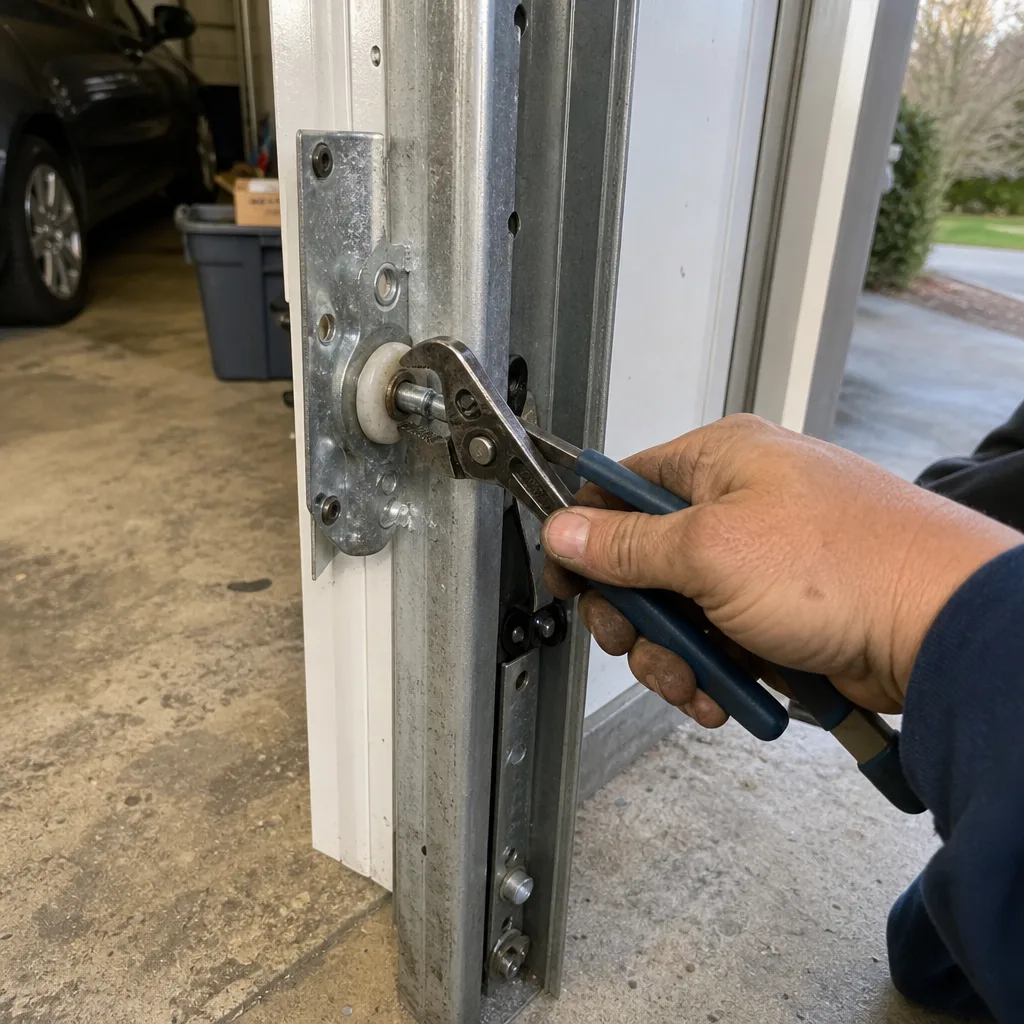
Torsion springs require specific winding bars and a torque chart for the wire size. There is no safe shortcut. A real answer names the tooling; a bad answer involves channel locks and hope. Garage door springs are under extreme tension – this is not a DIY repair, and a specialist who understands that will describe the safety protocol unprompted.
5. “Can you replace the opener and keep my existing smart-home setup?”
If your current opener connects to a LiftMaster MyQ app or a similar platform, will a replacement keep it working? A specialist knows the compatibility matrix. A generalist will install whatever box is in the truck and hand you back a non-functional app.
South Hill Red Flags in a Garage Door Quote
Some warnings are universal. These are the ones we see specifically in this market.
- Unusually low spring replacement quotes. Springs are a commodity with real grade differences. A quote that undercuts everyone else by a wide margin usually means a lower-cycle or lower-grade spring. It works – for a while.
- Vague “tune-up” packages. A tune-up should itemize exactly what’s being done: lubrication points, track adjustment, balance test, safety reversal test, sensor alignment. “Full tune-up, $99” tells you nothing.
- Pressure to replace the whole door on a repair call. Spring replacement and new doors are very different jobs. A specialist can tell you which one you actually need. A salesperson tells you the bigger one.
- “We handle all brands” with no specifics. Real specialists name the brands they know. Generic answers hide generic capability.
- No written estimate until the truck arrives. Every quote should be in writing, on paper or email, before anyone touches the door. Non-negotiable.
- No insurance certificate on request. In South Hill’s mix of newer plateau subdivisions and older Puyallup-adjacent homes, work happens above living space and on shared driveways. Insurance is not optional.
- “We’ll match any price.” What they’re really matching is spring grade. Ask cycle rating before you compare dollars.
How to Read Reviews Beyond the Star Rating
Five stars tells you someone was satisfied. It doesn’t tell you whether the technician was a specialist. Read the actual language of positive and negative reviews and look for these signals.
Signs a review reflects genuine expertise
- Brand names appear. “They diagnosed my Chamberlain opener’s logic board issue” carries weight. “Great service, friendly guys” is filler.
- Specific technical outcomes are named. “Actually fixed my door’s balance” or “found the real problem in the track, not the spring” – language a customer only uses if the technician explained the actual work.
- The reviewer describes a quote-then-work sequence. A review that says “quoted X, work matched the quote” is gold. A review that says “ended up costing more but worth it” is a warning.
- Repeated mention of the same technician or brand specialty. Real patterns show across reviews.
Signs a review is generic or templated
- Identical phrasing appearing across multiple reviews from different accounts.
- Praise for “responsiveness” and “professionalism” with no specifics.
- All reviews clustered on the same dates with no service detail.
Our advice: read the last ten reviews, not the first ten. Newest reviews reflect current technicians and current quality. Then read the two-star reviews closely – how a company responds tells you as much as the complaint.
What a Legitimate Written Estimate Must Include
For a repair job versus a full installation, the written estimate should look different. Here’s what to insist on.
Repair estimate must-haves
- Exact part or parts named, with spring cycle rating if springs are involved.
- Labor broken out separately from parts (or a single per-job figure with the parts itemized).
- Diagnosis notes explaining why the repair is what it is.
- Any safety inspection items discovered on arrival, priced separately so you can choose.
- A statement that the written price is the price – no surprises once the door comes off the track.
Installation estimate must-haves
- Door model, manufacturer, and R-value (not just “insulated”).
- Opener make and model if bundled, plus whether it’s smart-home compatible.
- Measurement notes – rough opening, headroom, and how the door will sit on your specific header.
- Disposal of the old door, haul-away, and any permit or HOA paperwork handled (ask).
- Timeline: measurement, order, delivery, install day, and finish-out.
Installation is measured, ordered, and scheduled – not same day. Anyone promising next-day installation has a door in a warehouse that may not fit your opening. A free measure and a written price is what a legitimate installation quote delivers. For repair work where speed matters, our garage door repair team offers same-day service and can quote on arrival.
Which Line Items Are Negotiable and Which Aren’t
Not all numbers are fixed. Here’s the split.
Negotiable
- Spring cycle rating. You can choose a lower-cycle spring to save money, understanding it will fail sooner. No reputable contractor should hide this option, though most will recommend the longer-cycle option.
- Opener brand within a compatible class. A Chamberlain unit versus a LiftMaster unit in the same class may differ by pricing depending on the day. Ask.
- Cosmetic upgrades. Windows, carriage-style faces, and premium finishes are all optional.
- Timing of a non-urgent installation. Ordering in a quieter season sometimes shifts the price.
Non-negotiable
- Proper tooling and safety protocol. Never accept a discount for “doing it quicker.”
- Insurance and registration. Not worth a savings.
- Written estimate before work starts. Always.
- Correct spring wire gauge for your door weight. Undersized springs break fast and are dangerous.
If a contractor offers to reduce the price by skipping a step, they’ve told you what you need to know about how they work.
Why Springs Deserve a Dedicated Specialist
Garage door springs are wound to hundreds of pounds of tension and stored in the metal. When they fail, they fail loudly – and the cables, drums, and the door itself can come down fast. This is the single highest-injury-risk part of any garage door repair. A specialist who does spring work as a dedicated service – not a side-add – knows the wire sizes, knows the torque chart, and knows the warning signs of fatigue long before the spring snaps.
Our team treats garage door spring repair as its own specialty. We don’t hand a torsion job to whoever’s free. That said, if you’re calling for a spring replacement, we want you to verify the same things we’d verify if we were sitting in your kitchen: the registration, the estimate, the cycle rating, and the brand familiarity. For the opener side, we cover the legacy Craftsman and Chamberlain systems most South Hill homes already run, plus newer smart-compatible LiftMaster and Genie units with the same approach through our garage door opener repair work.
Common Mistakes to Avoid
- Hiring a handyman because they’re cheaper. Garage door work is a mechanical specialty with real injury risk. A generalist’s rates look better until the door’s back out of balance in a week.
- Accepting a verbal quote. Get it in writing, itemized, before work starts. This applies to a 45-minute spring swap and a full installation alike.
- Skipping the cycle rating conversation. If the technician can’t tell you the cycle rating of the springs they’re installing, you’re buying a spring, not a solution.
- Replacing the door when a repair would do. A specialist will tell you when a repair is enough. A salesperson will tell you the door’s shot when it’s the opener.
- Ignoring out-of-plumb symptoms. A door that rubs the jamb on one side through the South Hill seasonal temperature swing is often a header issue, not a spring issue. Get a specialist diagnosis.
- Choosing a contractor by star rating alone. Read the last ten reviews for specific technical language and brand names, not just the star count.
- Overlooking smart-home compatibility on opener replacement. If your opener is tied to MyQ or another app, confirm the replacement keeps it working before the old unit goes in the dumpster.
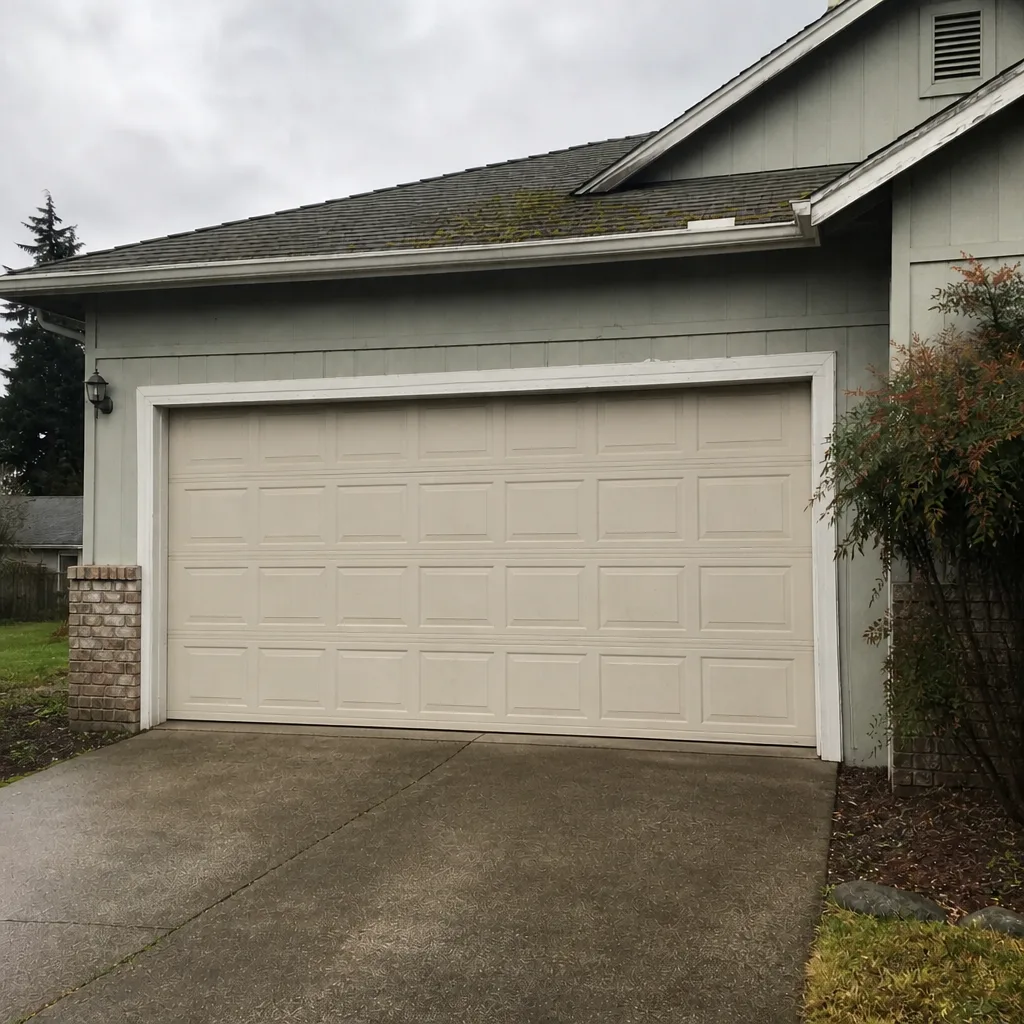
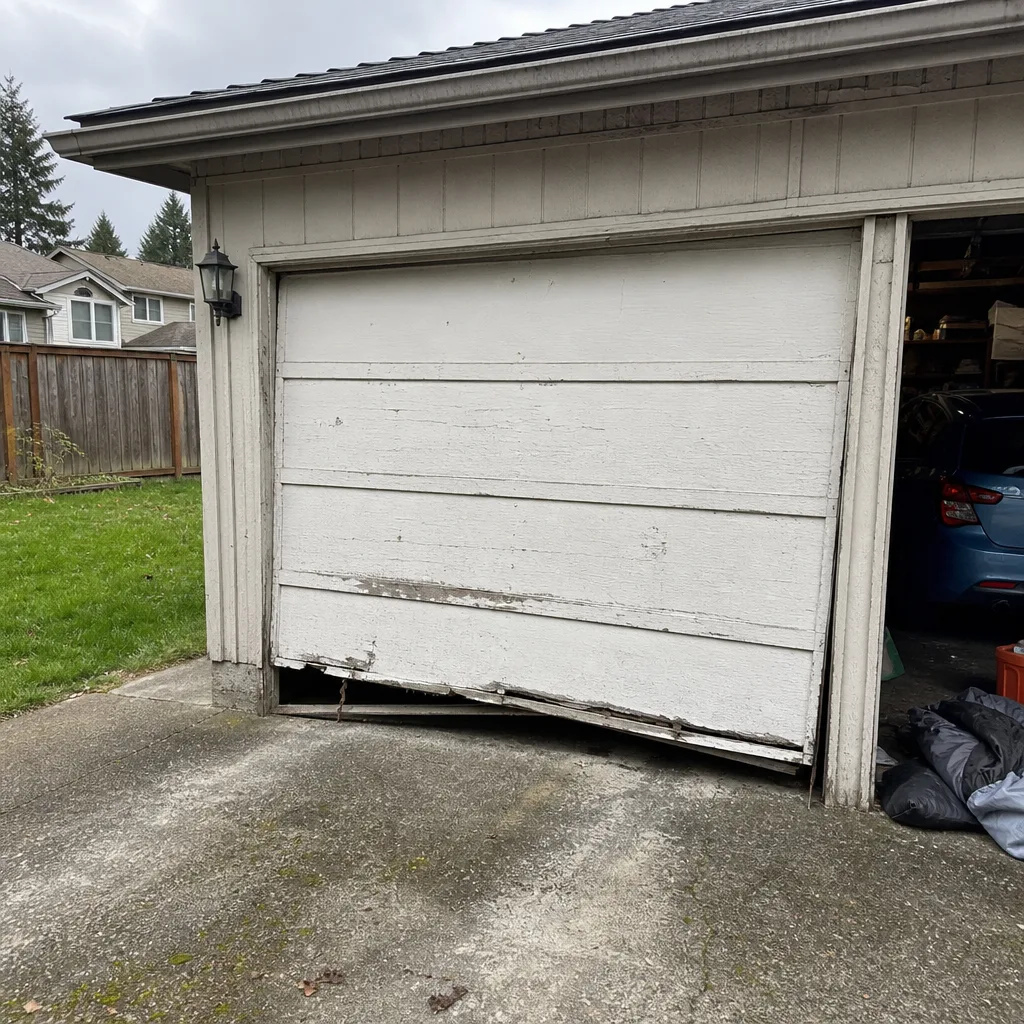
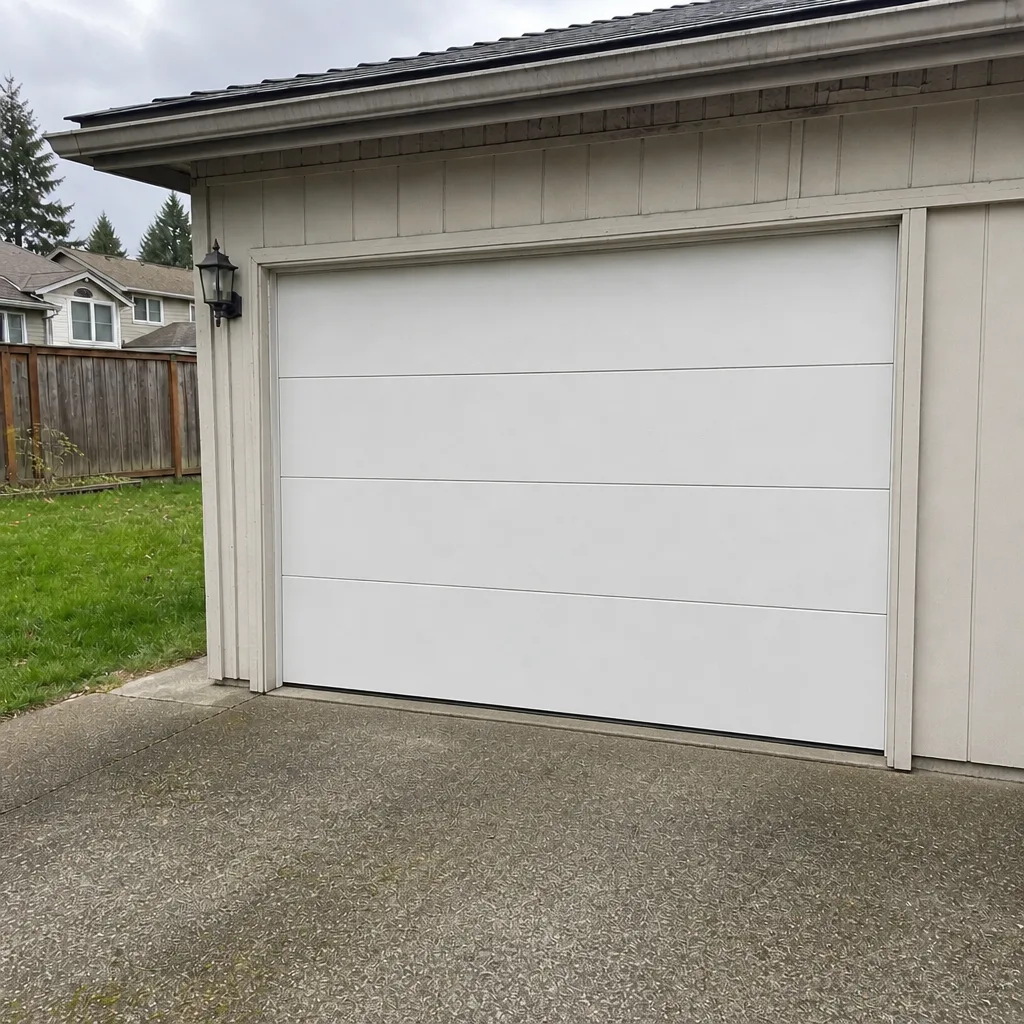
See the difference
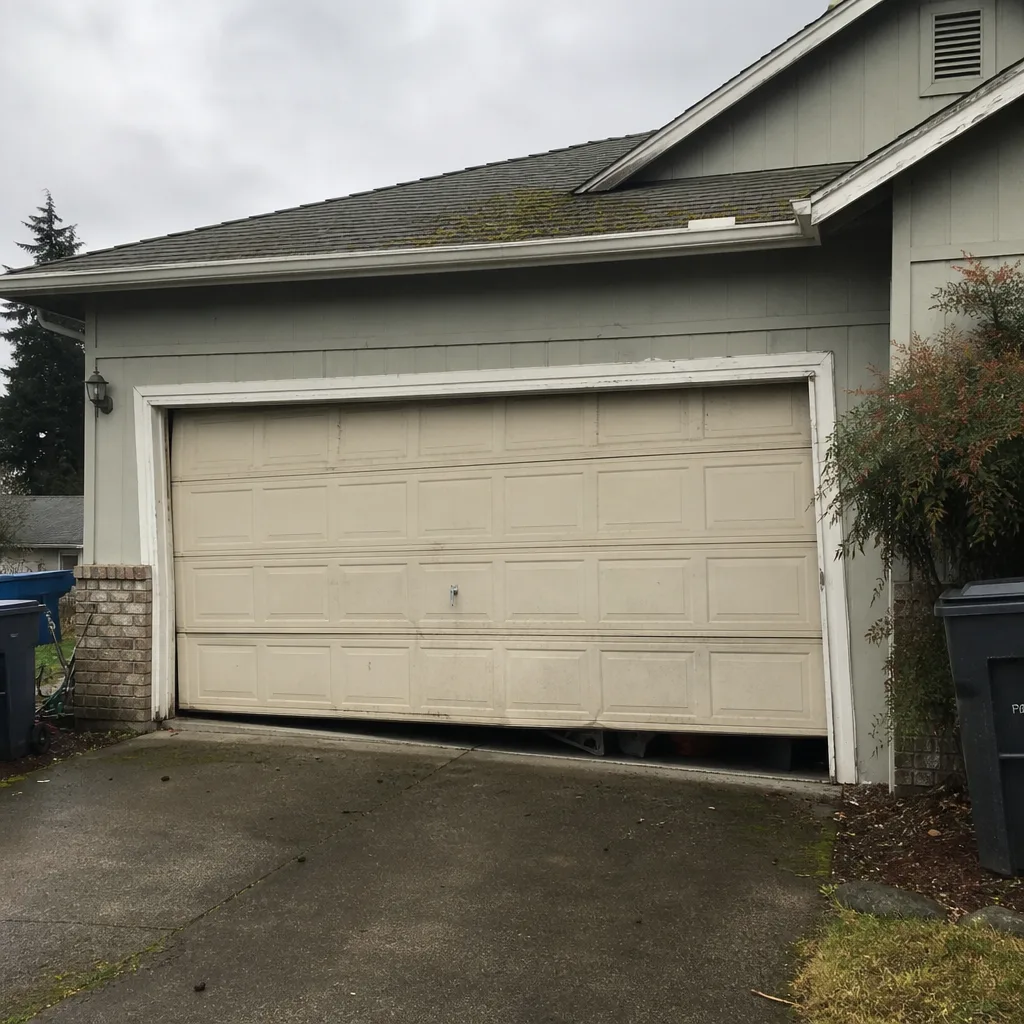 Before
 After
 Before
 After
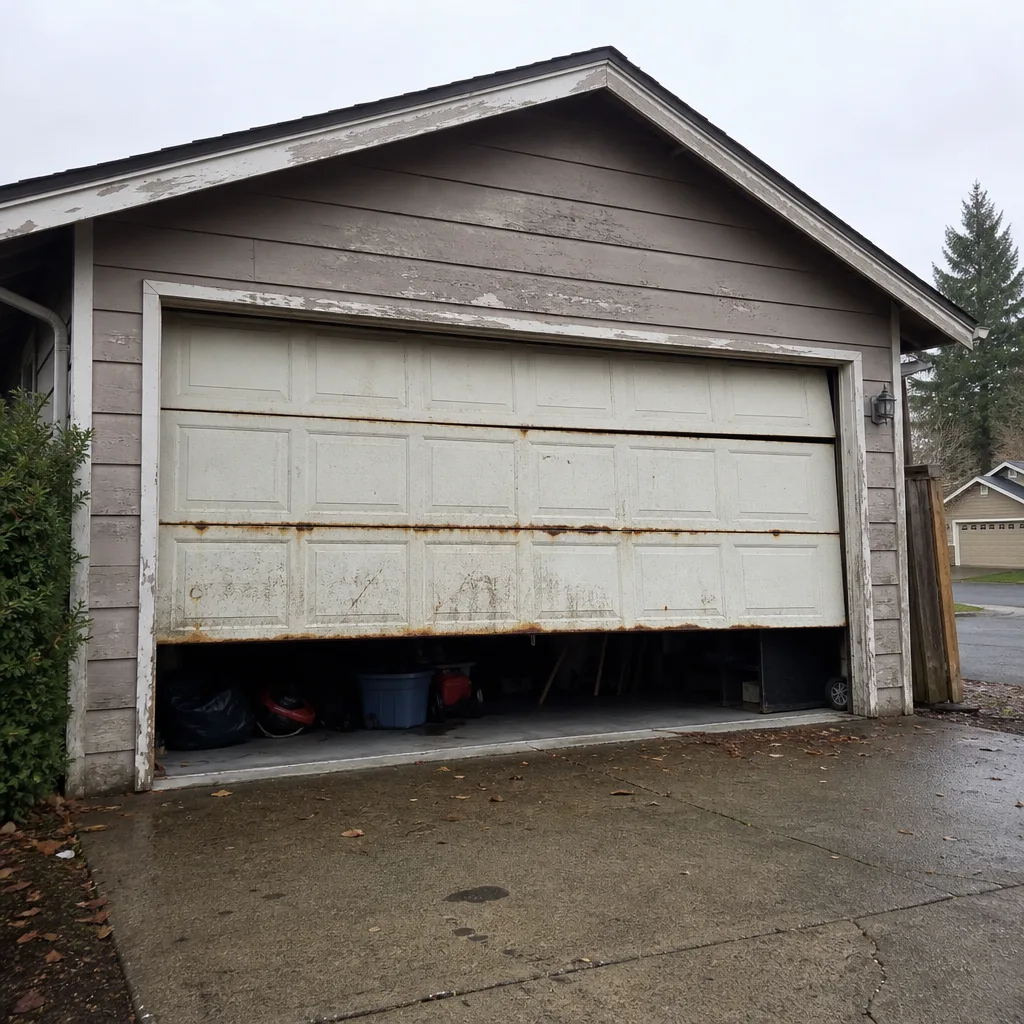 Before
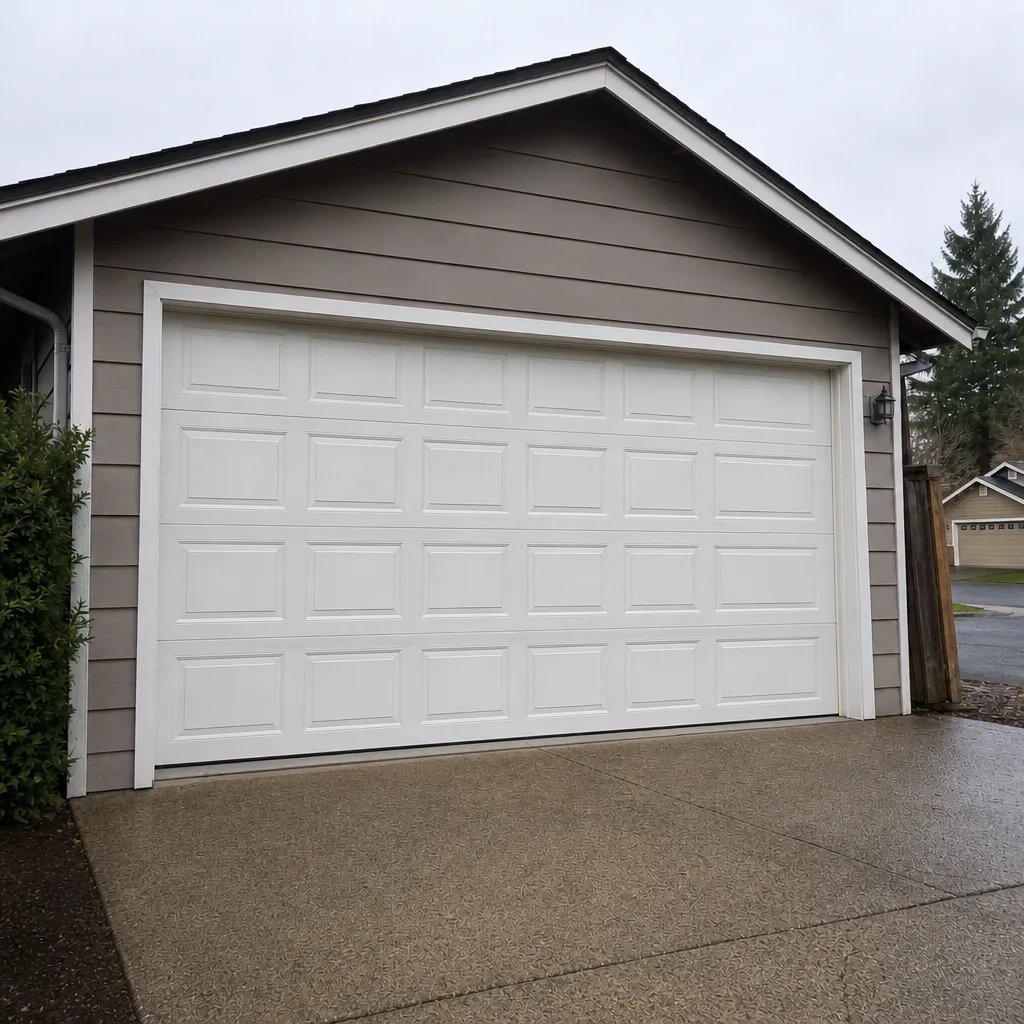 After
When to Call a Professional
Some garage door problems are cosmetic. Others are dangerous. Springs, cables, and high-tension assemblies are the dangerous kind – always. A door that won’t open, a door that goes up two feet and stops, a door that hangs crooked from its tracks, an opener that reverses on its own mid-travel, a door that makes a sharp crack when you touch the button: these need a trained professional. Even a misaligned safety sensor, which is a fast fix when it’s diagnosed right, can mask a force-limit problem that will damage the motor if you keep pressing the wall control. When your door won’t open, we treat it as the emergency it is – not as a sales opportunity. Garage Door Repair South Hill offers free estimates in South Hill. Call (844) 443-4774. We answer 24/7. Fast dispatch from 7am to 7pm, Sunday through Friday.
Frequently Asked Questions
Verify their Washington Labor & Industries registration, ask for a certificate of insurance, and ask five technical questions about spring cycles, out-of-plumb handling, brand-specific diagnosis, torque tooling, and smart-home opener compatibility. A genuine specialist answers all five with specifics; a generalist hedges. Our technicians have up to 11 years of experience and we’re happy to walk you through that verification before you commit. Call (844) 443-4774 for a free estimate in South Hill.
We don’t publish a flat price because springs vary by gauge and cycle rating, and the estimate is set per job. What we will do is give you a written, itemized quote before any work starts, name the cycle rating on the springs, and confirm that’s the price you pay. Estimates are free. Call (844) 443-4774 and we’ll talk through what your door needs.
Most specialists recommend replacing both springs together when the door uses a matched pair, because they’ve cycled the same number of times and the second one is usually close to failing. Replacing just one saves money upfront but often means a second failure not long after. We’ll explain which your door uses and price both options in writing. Call (844) 443-4774 for an estimate.
In most cases, replacing a garage door on a single-family home is considered like-for-like maintenance and doesn’t require a permit, but the rules live with the city and county, not with us. Ask the City of Puyallup’s building department or Pierce County before you sign anything, especially if the size, placement, or headroom of the opening is changing. A legitimate installer will ask you the same question. Call (844) 443-4774 if you want to talk through your install first.
Look for brand names (LiftMaster, Chamberlain, Craftsman, Raynor), technical details (“diagnosed the logic board,” “fixed the balance”), and any language about quoted versus final cost. Skip reviews that only praise “friendliness” or “responsiveness” – those are generic and don’t tell you what kind of technician showed up. Read the last ten reviews rather than the first ten. Call (844) 443-4774 if you want to compare what you find to how we work.
We offer same-day service where scheduling allows – a door that won’t close is a security problem, not a convenience problem, and we treat it that way. Call (844) 443-4774. We answer 24/7. Fast dispatch from 7am to 7pm, Sunday through Friday. A call outside dispatch hours is booked into the next opening, Sunday through Friday, 7am to 7pm.
Yes. One call covers repair, opener, springs, or a full new installation. We’re experienced with LiftMaster, Chamberlain, Genie, Clopay, Amarr, Wayne Dalton, Craftsman, and Raynor product lines, so whether you’re repairing a ten-year-old Craftsman opener or speccing a new Clopay door, we can quote the whole project. Installation is measured, ordered, and scheduled after a free measure and a written price. Call (844) 443-4774 to start.
The Bottom Line
Hiring a garage door contractor in South Hill isn’t about finding the cheapest quote – it’s about separating a true specialist from a generalist who added the category recently. Verify L&I registration and insurance. Ask the five technical questions. Read the last ten reviews for brand names and specific outcomes. Demand a written, itemized estimate before any tool comes out of the truck. And remember that spring work is spring work – it’s the highest-risk repair on the whole door, and it deserves someone who treats it as a specialty. Do those things and you’ll hire right the first time. Need a second opinion on a quote? Give us a call. We’re glad to talk through what you’re being told, and our written estimate for your job is free.
Ready to get a written estimate? Call (844) 443-4774. We answer 24/7. Fast dispatch from 7am to 7pm, Sunday through Friday. Estimates are free, and the price is quoted and agreed before any work starts.
Written by the team at Garage Door Repair South Hill.