
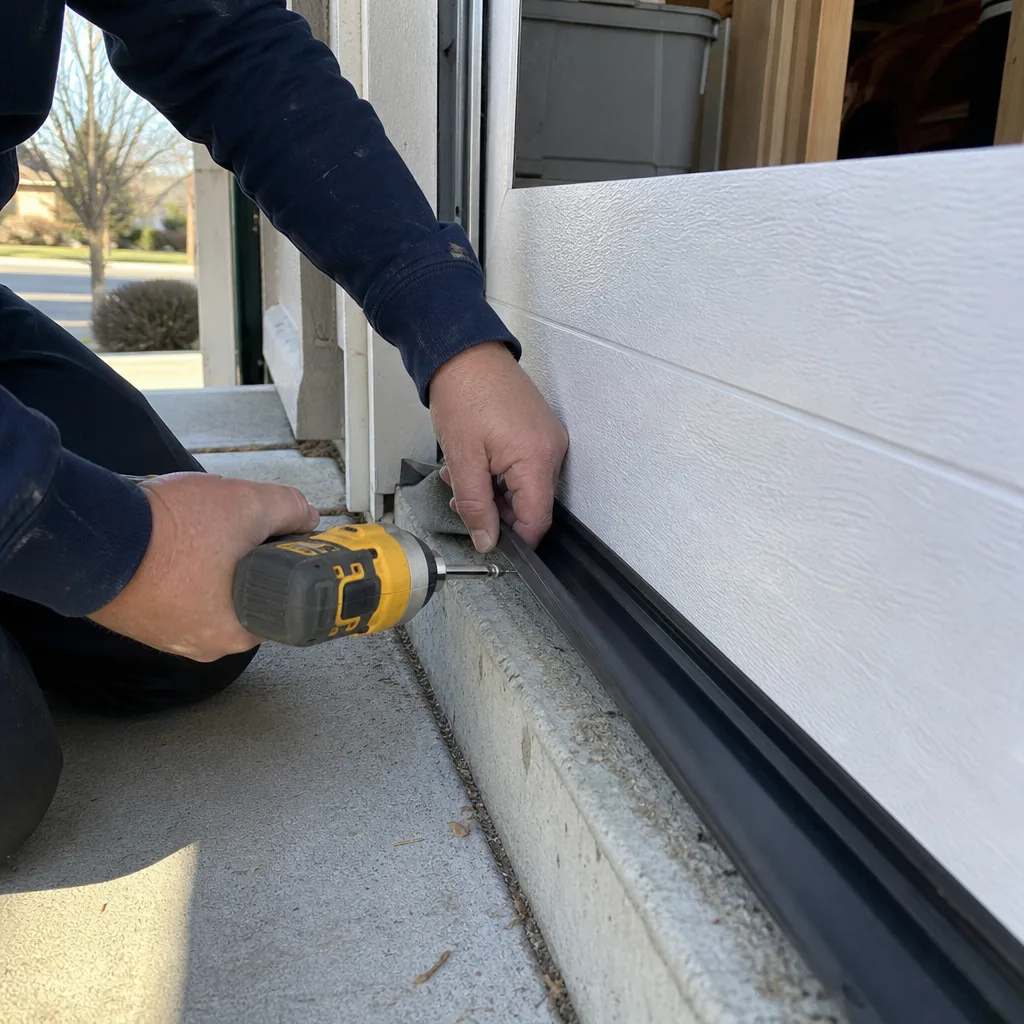
Last updated November 22, 2026
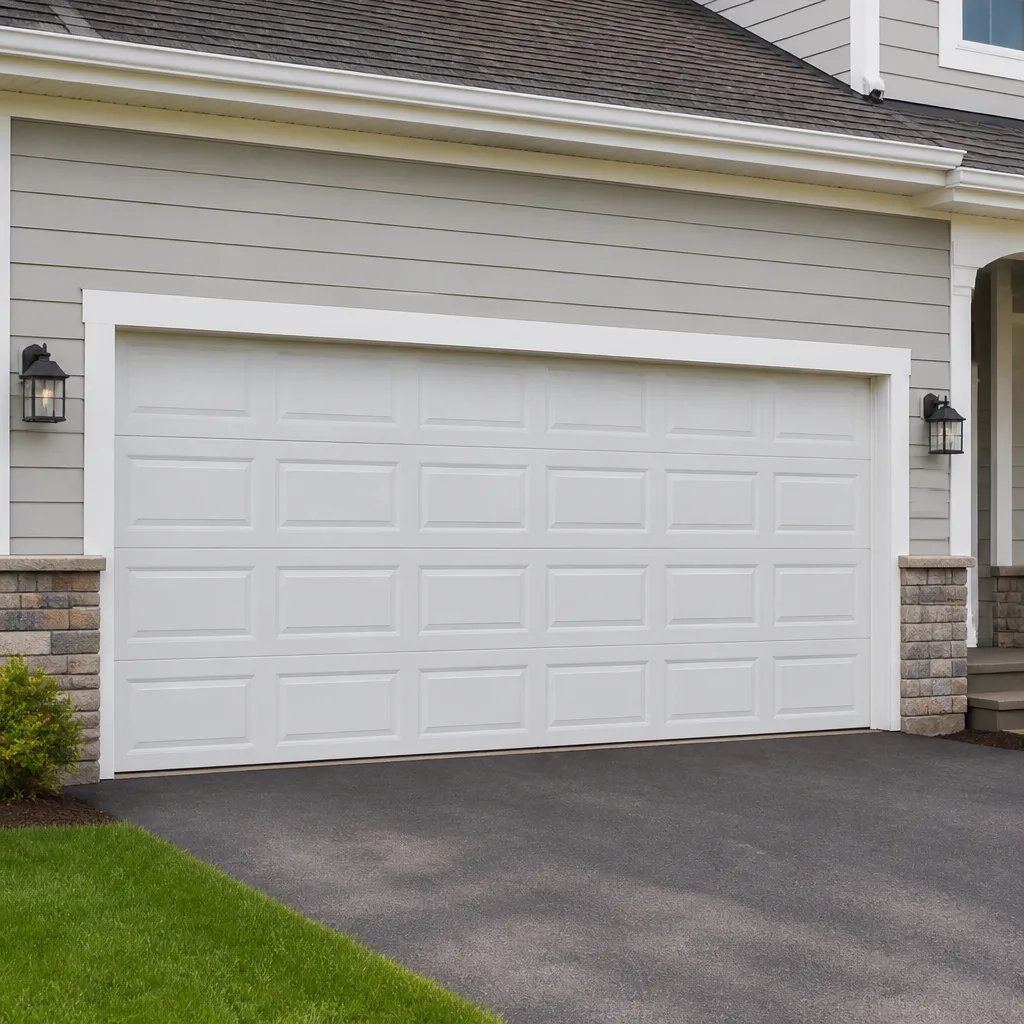 Raised-panel steel
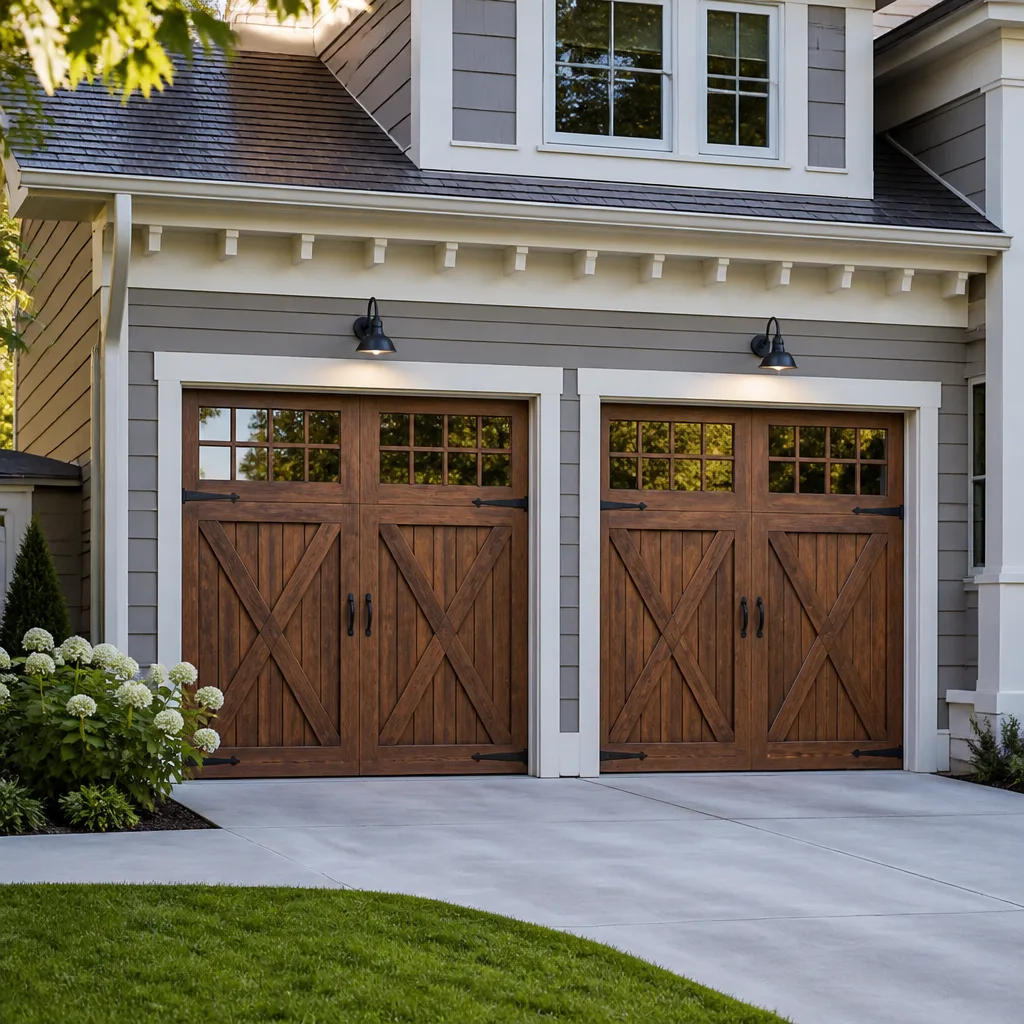 Carriage house
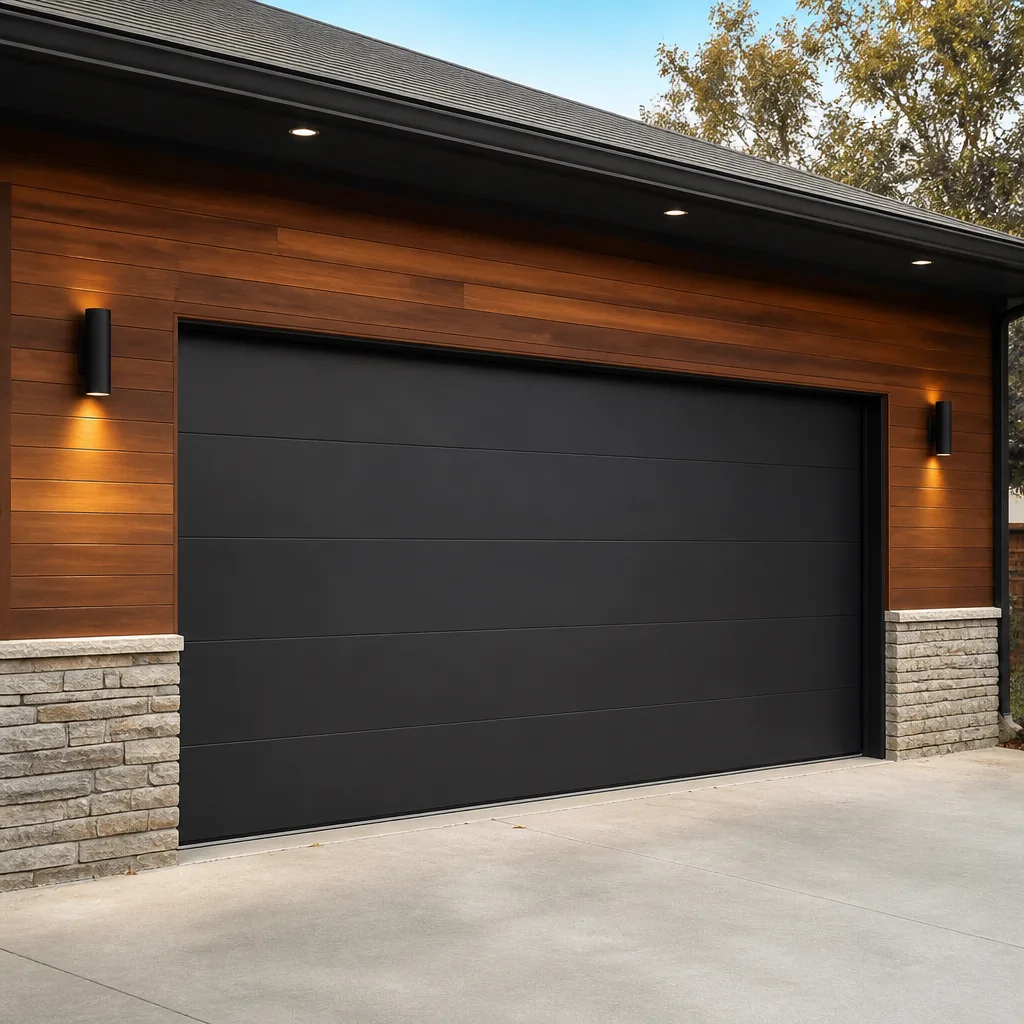 Modern flush
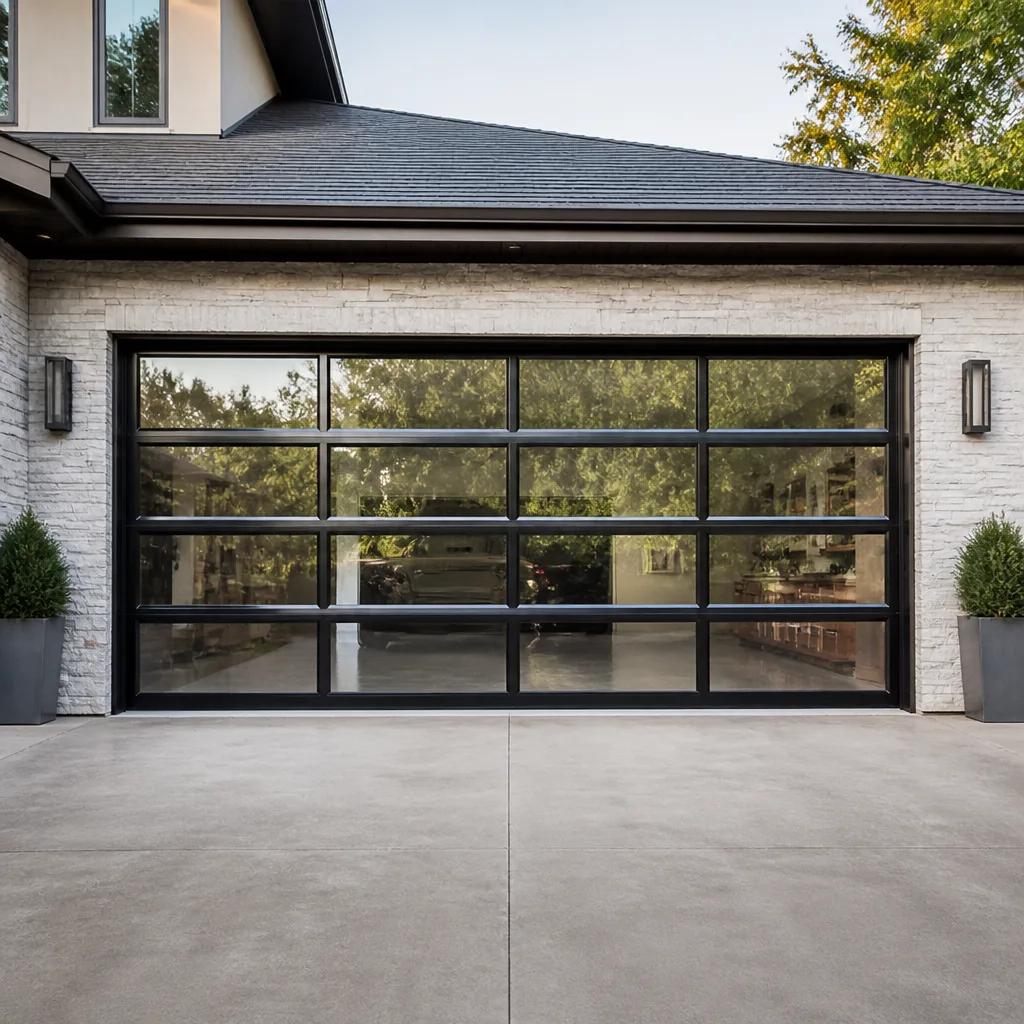 Full-view glass
 LiftMaster openers
 Chamberlain openers
Full 25-point door and opener safety check with every visit - springs, cables, rollers, tracks, and your LiftMaster or Chamberlain opener included
You get a price before we start. It does not change when the pro arrives.
Get your free estimateDIY vs Professional Garage Door: The South Hill Homeowner’s Decision Guide
Replacing a bottom seal is a legitimate 20-minute DIY job. Adjusting torsion spring tension is a task that sends roughly 20,000 Americans to emergency rooms each year, and YouTube tutorials don’t mention which one you’re watching until you’re already committed. That’s the problem with treating “garage door repair” as a single decision. It’s not. It’s a set of a dozen or more distinct jobs, each with its own risk profile, tool requirements and failure cost. This guide maps that split task by task for South Hill homeowners, so capable people don’t overpay for simple work and don’t underestimate the dangerous kind.
Quick Answer
Most garage door maintenance is safe to do yourself, including lubrication, weather seal replacement, track cleaning and photo-eye alignment. Anything involving torsion or extension springs, the cables, or the door’s balance and lift system belongs to a trained professional. In South Hill, our rule of thumb is straightforward: if the task means loosening a fastener that holds stored mechanical energy, stop and call a technician.
Styles & brands we work with
- Raised-panel steel
- Carriage house
- Modern flush
- Full-view glass
- LiftMaster openers
- Chamberlain openers
Table of Contents
- The Three-Tier Task List: Safe DIY, Research-Required, Professional-Only
- Why Springs Sit Alone in the Professional-Only Column
- The Mid-Tier Jobs: Tools, Skills and Honest Self-Assessment
- The Cost Math on South Hill’s Most Attempted DIY Jobs
- The Washington Liability Question After a Failed DIY Repair
- What South Hill’s Climate Does to a Garage Door
- How to Work Alongside a Technician and Shrink the Bill
- Brand-Specific Diagnosis: Why Guesswork Costs More
The Three-Tier Task List: Safe DIY, Research-Required, Professional-Only
The clearest way to decide is to sort every garage door task into one of three tiers. Tier one is routine care a handy homeowner can complete with basic tools. Tier two needs the right tools, some study and a realistic read on your own patience. Tier three has no DIY lane at all. In our experience, most South Hill calls come from tier-two jobs someone attempted with tier-one confidence.
- Safe DIY: lubricating hinges, rollers and tracks; replacing the bottom weather seal; wiping down photo-eye lenses; tightening the bolts on the hinge plates; touching up rust spots with primer; clearing debris from the tracks.
- Requires research and correct tools: replacing a single damaged roller; swapping out a bent bottom bracket that isn’t spring-loaded; realigning a track that’s been bumped; adjusting opener travel limits and force settings; aligning or replacing a misbehaving safety sensor; replacing a panel after cosmetic damage.
- Professional-only, no exceptions: torsion spring replacement; extension spring replacement; cable replacement of any kind; replacing a center bearing plate or winding cone; correcting a door that’s out of balance; any work that requires removing the door from its tracks; high-lift or low-headroom conversion.
The dividing line is stored energy. A torsion spring on a standard residential door holds enough force to bend steel. Nothing in the safe-DIY column involves releasing or adjusting that force. If you’re unsure which tier your repair falls into, that uncertainty itself is the answer: call and ask. A quick phone conversation costs nothing and settles the question faster than a video search.
Why Springs Sit Alone in the Professional-Only Column
Torsion and extension springs counterbalance the entire weight of the door. When you disconnect an opener or lift the door by hand, the springs are doing most of the work. They’re wound to tension under load, and that tension doesn’t leak out slowly the way it does in a spring you can see. It releases all at once when a fastener lets go.
That’s the mechanical reason spring work is the wrong DIY project. The injury data is the practical reason. Bystanders and homeowners handling springs are a routine source of hand, wrist and facial injuries every year. It’s also one of the most frequent targets for our dedicated garage door spring repair service, and we treat it separately for that reason: proper winding bars, correct wire gauge, and knowledge of how the spring was originally sized to the door’s weight.
Something else worth knowing: a new spring has to be matched to the door. Spring sizing is calculated from the door’s weight and height, and a mismatched spring will either leave the door too heavy to lift or over-tension it and wear out the opener. That sizing math isn’t difficult for someone who does it regularly, but a wrong guess doesn’t always fail immediately. It fails months later, usually with a snapped spring and a bent track underneath.
The Mid-Tier Jobs: Tools, Skills and Honest Self-Assessment
The average homeowner can handle some of these and shouldn’t touch others. Below is the honest prerequisite list for the jobs that sit between routine care and mechanical work.
Roller replacement
You need a flathead screwdriver, a pair of locking pliers and a stepladder tall enough to reach the top hinges without stretching. The door should stay closed and the springs untouched throughout. It’s a 15-minute job per roller on most doors, and the tricky part is getting the hinge plates to line back up without cross-threading. Replacing all the rollers at once is worth it if the door has been squeaking for a while.
Photo-eye and safety sensor alignment
No special tools required, but patience is. The two sensors at the base of the frame need to face each other squarely, and many modern openers use an indicator light to tell you whether the beam is breaking. South Hill winds and small ground movement can knock these out of alignment, so this is a common call we see. It’s genuinely DIY-friendly, and if a sensor lens is cracked or the wire is frayed, that’s the point to hand it to a technician.
Panel replacement
Cosmetic panel swaps (the kind that follow a bumped car or a glancing impact) require the correct replacement panel, which means knowing your door brand and model. A Wayne Dalton panel doesn’t interchange with a Clopay panel, and even within one brand, profile shapes change by line. Bolting in a panel is not technically hard; sourcing the right one is where people get stuck. If the panel sits behind the springs or holds the cable bracket, it’s no longer a cosmetically driven job.
Opener adjustments
Travel limits and force settings live in the opener head, and most LiftMaster and Craftsman openers walk you through the adjustments in the manual. Adjusting them is fine. Diagnosing why the door started needing the adjustment is the part most homeowners miss, because a door that suddenly trips the reverse test usually has a balance problem, not an opener problem. That’s where garage door opener repair starts to overlap with the door itself.
The Cost Math on South Hill’s Most Attempted DIY Jobs
DIY saves money on some jobs and creates a bigger bill on others. The math below is a reasonable estimate of what each path costs in South Hill, though the written estimate from the technician always sets the final number.
- Bottom seal replacement: DIY parts run roughly $25 – $60. Hiring it done typically runs $90 – $180 installed. This is the clearest case where DIY math wins, if the track isn’t bent underneath.
- Roller replacement: DIY parts run $30 – $80 for a full set. Professional replacement usually runs $120 – $220. Also a reasonable DIY if you’re comfortable on a ladder.
- Single spring replacement: the spring itself costs the homeowner around $30 – $80 at retail. Professional replacement typically runs $180 – $340 per spring, and a matched pair is usually replaced together, so a pair lands near twice that. DIY spring work is exactly where the cost math stops being about money.
- Opener adjustment: free if you’ve got the manual. A professional diagnostic and adjustment is usually rolled into a service call, typically $75 – $140 if it’s the only work.
- Track realignment: DIY saves almost nothing here because the tools and the alignment procedure are the whole cost. Professional work typically runs $100 – $200.
- Full door replacement after a failed DIY attempt: a bent door from a spring failure often means a new door, which runs $800 – $2,800 in this market depending on size and insulation. This is the number that eats every dollar a homeowner saved on the spring.
The middle-row jobs are the ones that shift based on your own ability. If the DIY price plus the value of your own time lands within $50 of the professional range, call a technician and stop thinking about it. For anything in the spring or cable column, the diy math never makes sense because the potential downside skews so far past the savings.
The Washington Liability Question After a Failed DIY Repair
Homeowners ask us this regularly: if a DIY repair goes wrong and the door falls on a vehicle or a person, what happens? The short version is that homeowner’s insurance generally covers sudden accidental damage to your own property, including the door falling on a car in the garage, but coverage details vary by policy. If a guest is injured because of a repair you performed, your liability coverage usually steps in, though the insurer will want to know exactly what happened.
The specific worry we hear most is a spring repair failing and the door dropping onto a parked car. In practice, insurers handle those claims differently depending on how the damage occurred, and the burden of proof usually sits with the homeowner to describe the repair in detail. That includes whether the work was done by someone with training. Insurance claims are complicated enough that we recommend calling your own insurer directly with questions rather than relying on what a contractor tells you.
There’s also a permit question. Most cities in Washington require a permit for structural changes to a garage door frame or a new door installation, so check with the City of South Hill’s building department or the county before starting a replacement project. Repairs to existing components usually don’t need a permit, but confirming is free.
What South Hill’s Climate Does to a Garage Door
South Hill sits in a climate most homeowners in milder parts of the country don’t have to think about. Frost brings the door panels through repeated contraction cycles from October into March, and those cycles work every fastener, seal and hinge on the door a little looser each winter. Bottom seals crack faster here than they would in a moderate climate. Hinge plates loosen on a similar rhythm. By the time the door starts sounding different in early spring, most of that shift happened quietly over the cold months.
Spring and early summer bring wind and rain to South Hill. That matters more for the tracks than the door itself, because windblown debris collects in the channels and the photo-eye lenses. A door that works fine in the sun can refuse to close after a windy week, and it’s usually a dirty lens or a leaf jammed against the sensor.
The practical DIY angle: walk around the door at the start of fall and again in early spring. Check the bottom seal for cracking, listen at the hinges for squeaks, and clean the tracks and photo-eye lenses. Fifteen minutes of seasonal care in South Hill keeps the door reliable through the worst of the weather and cuts how often you actually need a repair visit.
How to Work Alongside a Technician and Shrink the Bill
The billable time on a service visit is usually dominated by diagnosis and setup. There’s a legitimate set of tasks a homeowner can handle that reduce both without touching the technical work. Here’s what actually moves the needle:
- Clear the garage floor. A technician who can walk a full circle around the door, set up a ladder and move a vehicle out of the way saves time before any tool comes out. That savings is real.
- Write down the door’s make, model and approximate age, along with the opener’s brand. If you already know your door is a Raynor and your opener is a LiftMaster, say so when you call. It changes what parts go into the initial visit.
- Purchase the parts you’re confident about. Bottom seals, rollers and photo-eye sensors are commodity items. If a technician tells you which seal profile or which roller diameter to buy, buying it yourself is a legitimate way to keep the bill down.
- Photograph the door from the garage and from the driveway before the visit. A quick set of photos showing the problem can cut a few minutes off the diagnostic walk-around, especially on opener issues.
- Have a spare key or the code ready. Openers with keypad access need to be tested, and a homeowner who has to dig for the code wastes visit time.
- Report the door’s behavior precisely. “It opens halfway and stops” is more useful than “it’s broken.” A specific description shortens the diagnosis significantly.
What homeowners should not do to reduce the bill: skip the inspection on a repair that looks obvious, or take the door apart “just to see what’s going on.” A partially disassembled door is a longer diagnostic, not a shorter one. It’s also the way a small repair turns into a full balance-and-align.
Brand-Specific Diagnosis: Why Guesswork Costs More
Garage doors and openers are not interchangeable across brands. Each manufacturer has its own parts logic, wiring scheme, and failure patterns. LiftMaster openers, for instance, tend to fail at the logic board or the safety sensor relay long before the motor gives out. Craftsman units from the legacy Chamberlain ecosystem have different force-limit behavior and often look “dead” when they’re just tripped on a sensor. Wayne Dalton door panels use a proprietary hinge system that behaves differently under load than a Clopay panel. A Raynor door that’s out of balance tends to fail at the top roller carriers.
That matters for the DIY question because it changes where the mid-tier jobs land. If you’re calling a technician, ask whether they know your brand by name. A generalist who doesn’t know LiftMaster from Genie is going to lose time running the same tests on every door. In our experience at Garage Door Repair South Hill, calling for a repair on a door or opener we already know the failure pattern for usually means a shorter visit, and shorter visits are the ones you want.
Whether you decide to handle a task yourself or bring in a technician, the diagnosis question is worth answering before any tool comes out. Our technicians have up to 11 years of experience working across the eight most common residential brands. If you want a second opinion on whether a task belongs in your DIY column or ours, that’s a conversation we’re glad to have, and garage door repair estimates are free.
Common Mistakes to Avoid
- Cutting a torsion spring out with a bolt cutter. Under load, a cut spring releases stored energy sideways. A technician releases tension with the correct winding bars and no cutting at all.
- Leaving the opener connected while manually testing a door. An opener arm bolted to a door someone is testing by hand can turn an adjustment into an injury. Disconnect the emergency release if you’re lifting the door.
- Adjusting force limits to solve a balance problem. If the door is out of balance, cranking the force setting up hides the imbalance and wears out the opener sooner. Fix the balance, not the symptom.
- Replacing missing hinges or rollers with hardware store parts that don’t match. Hinge plates and rollers are load-rated. Substitute hardware in a South Hill winter will work until it doesn’t, and the failure is usually at the worst possible time.
- Skipping the seasonal lubrication. The most common cause of a noisy door in South Hill isn’t a worn part, it’s dry hinges and dry tracks that have needed a 10-minute lubrication for a year.
- Assuming the door “isn’t worth fixing.” A door that’s out of balance or has a single bad panel can usually be repaired. Full replacement is a real option, but it’s a bigger decision than most failures require.
- Disconnecting the opener and never reconnecting it. A disconnected door held up by a vice grip is a door that can come down on someone. If the opener is failing, fix it, don’t disable it.
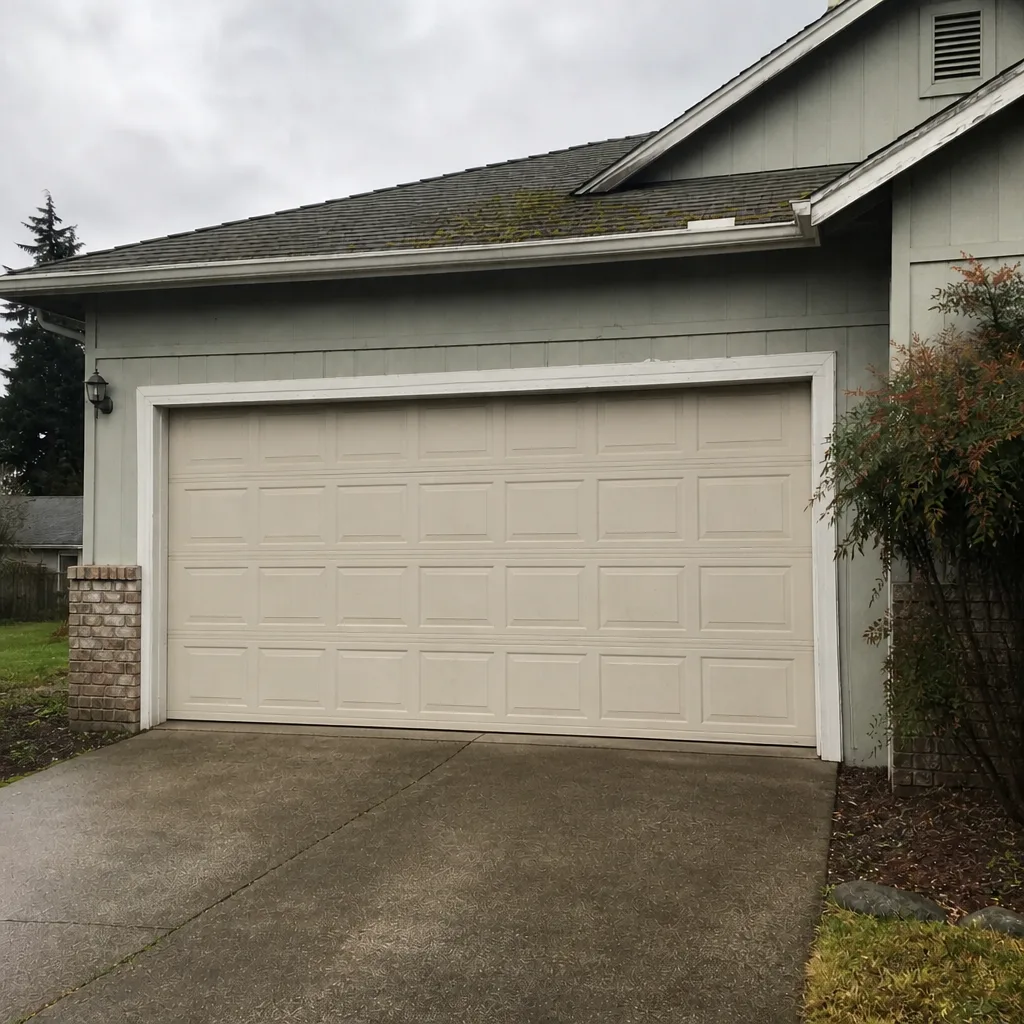
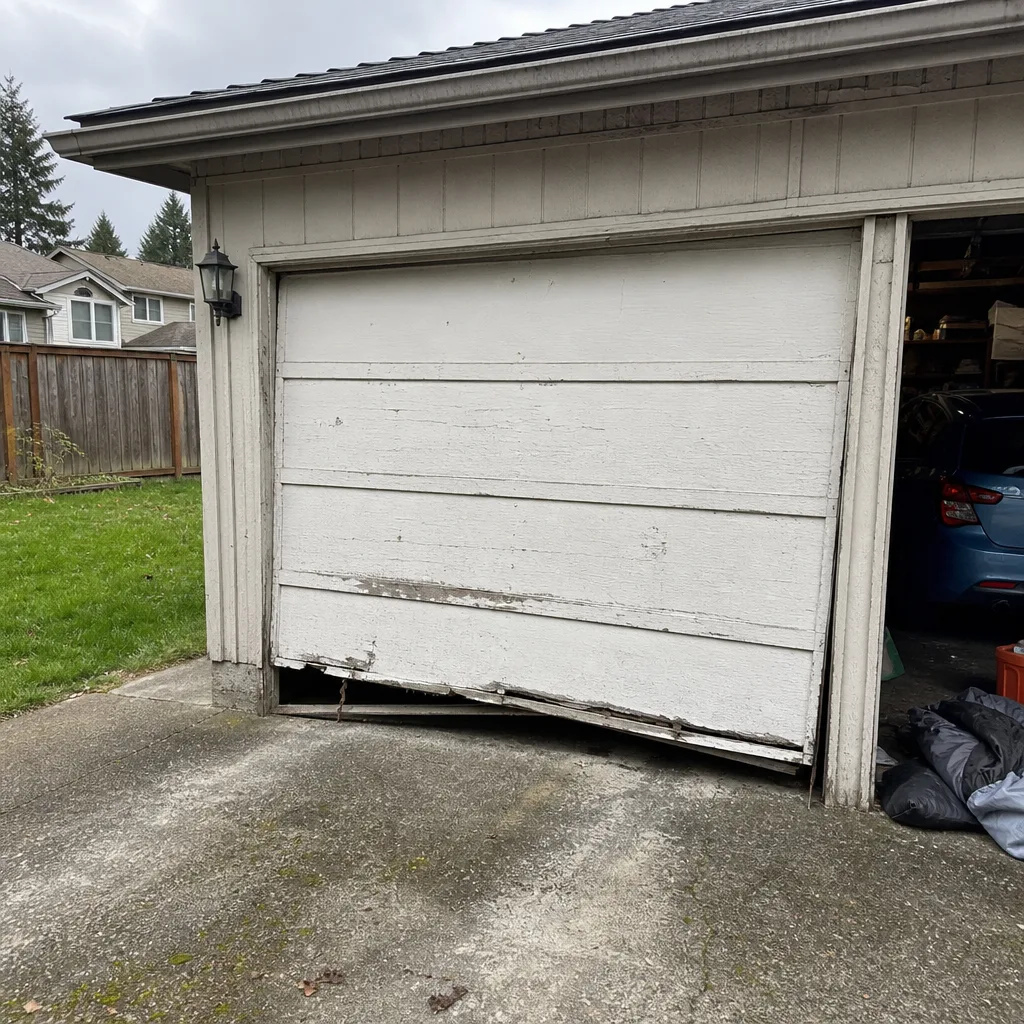
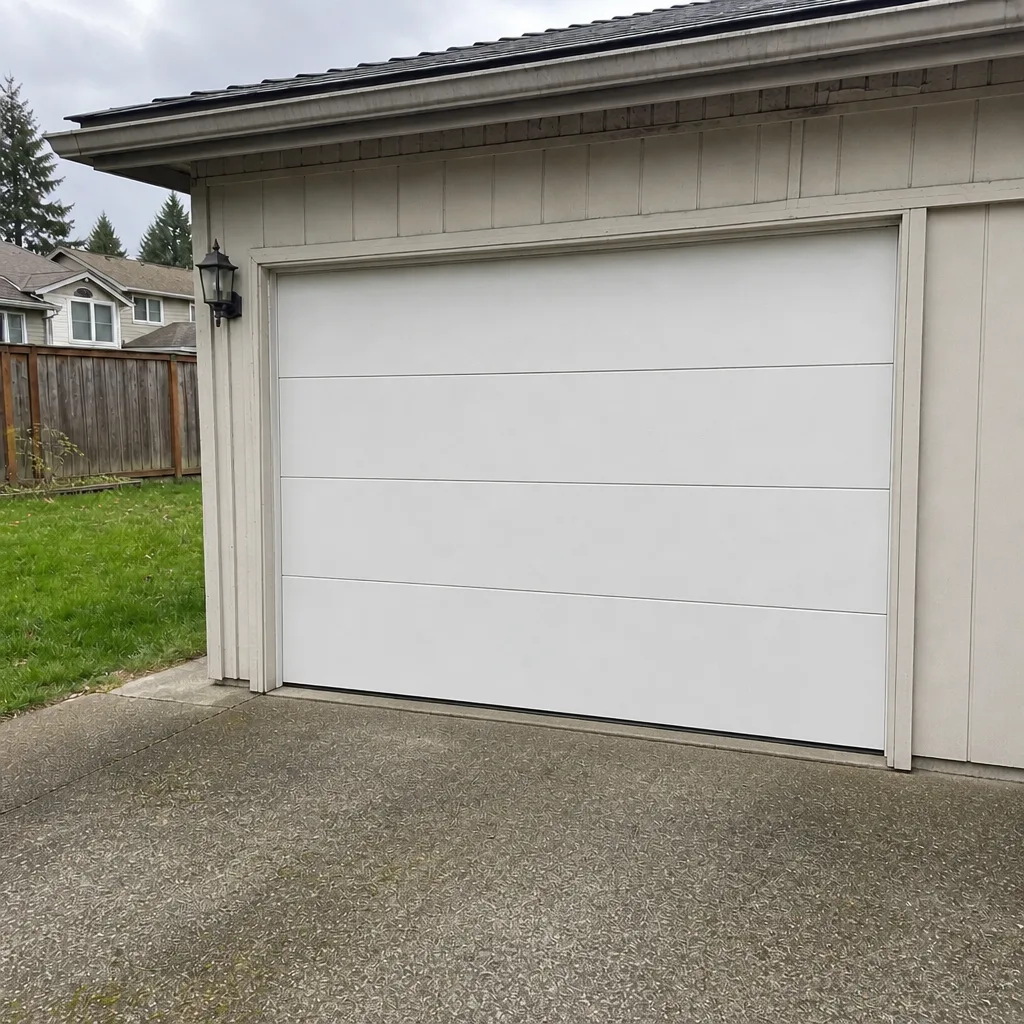
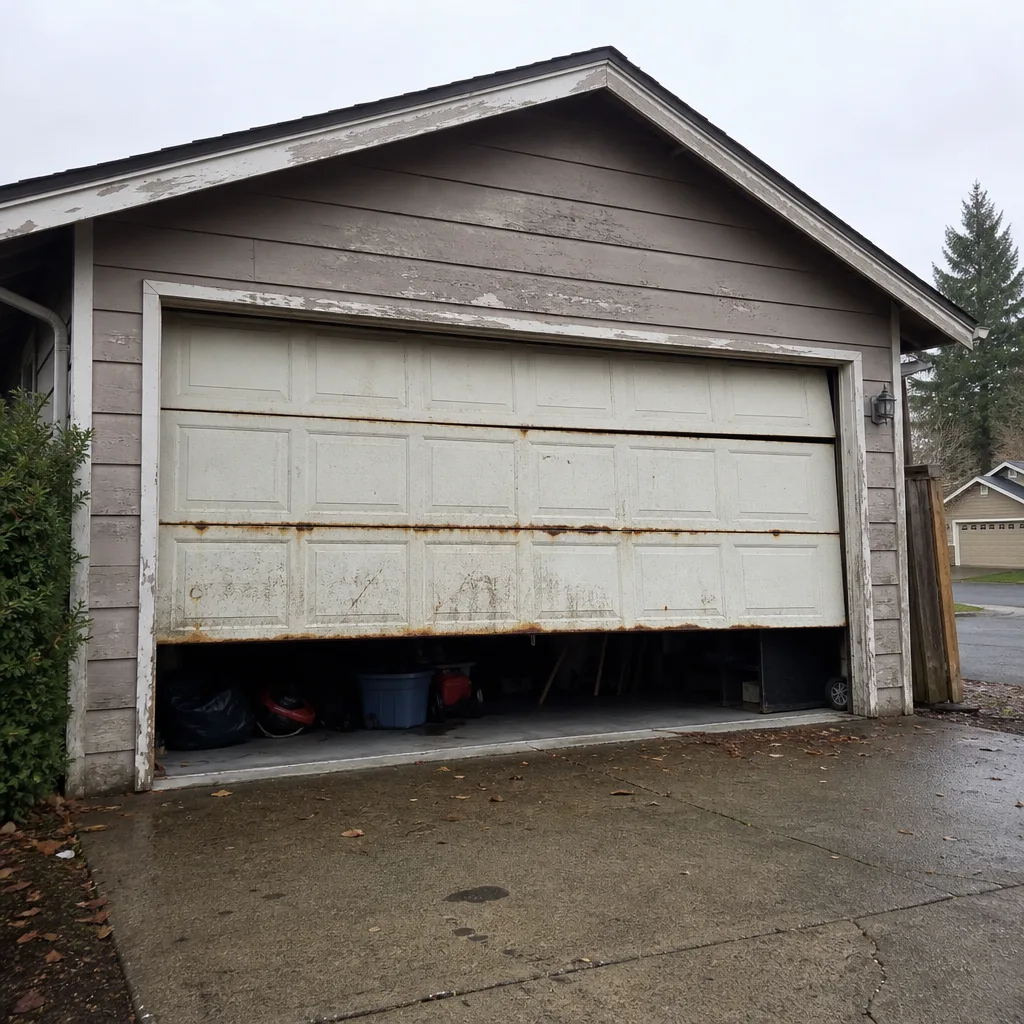
See the difference
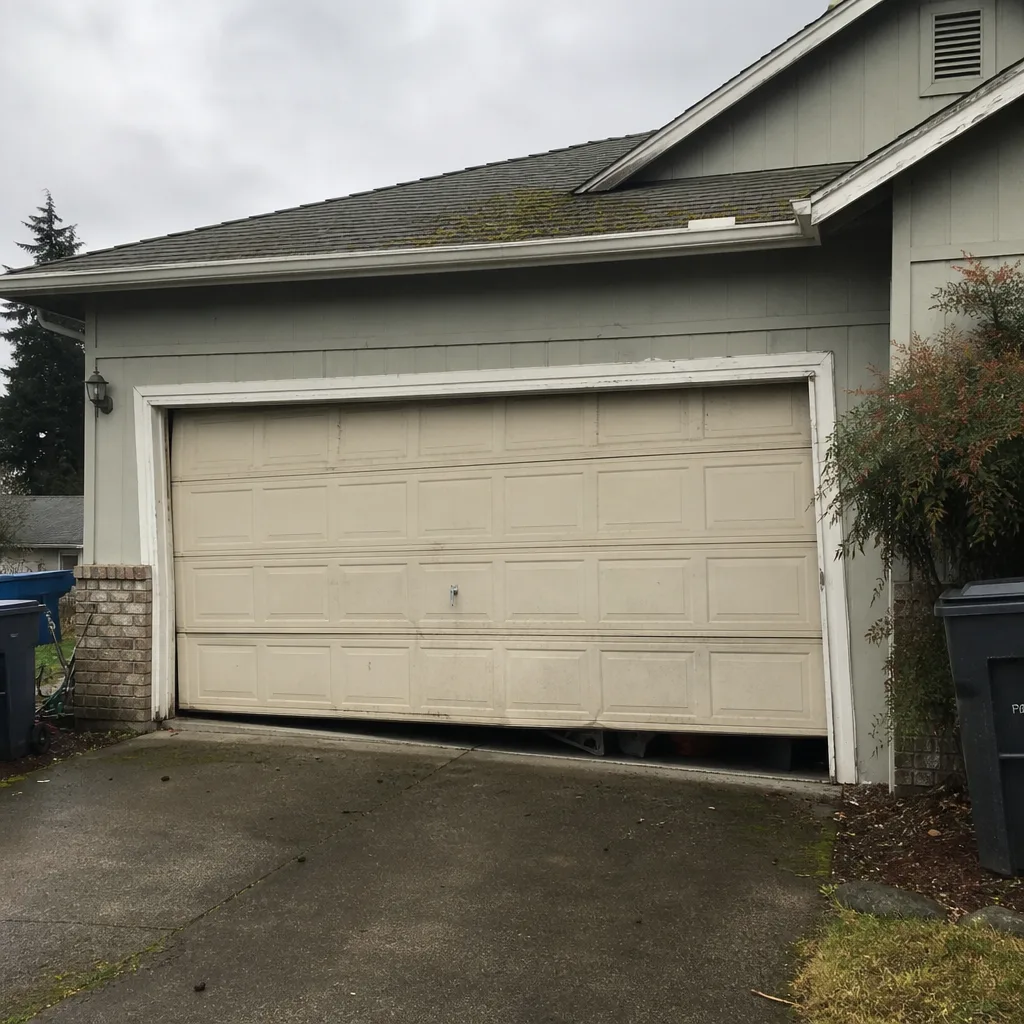 Before
 After
 Before
 After
 Before
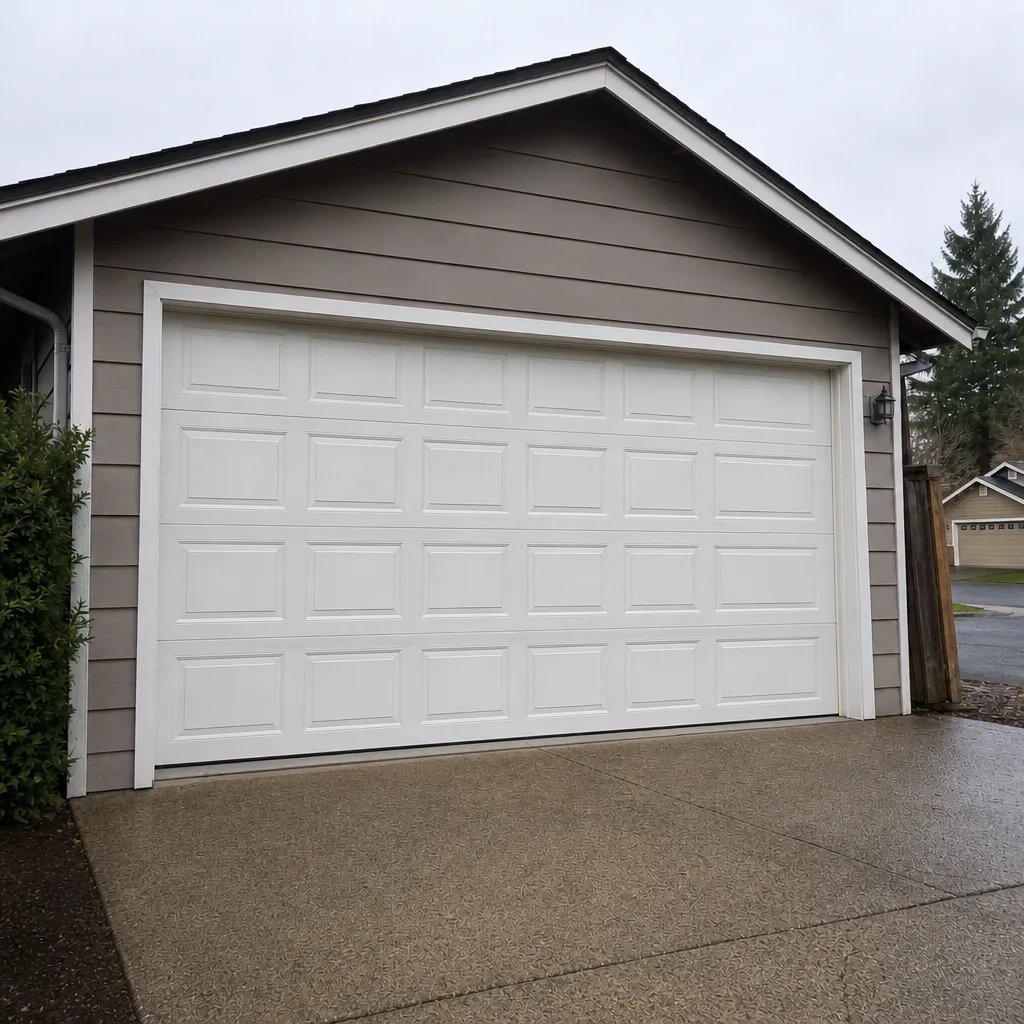 After
When to Call a Professional
Call a technician if the door is out of balance, if either spring is broken or looks worn, if a cable is loose or frayed, if the door won’t stay level when raised halfway, or if the opener runs but the door doesn’t move. Also call for anything that requires disconnecting the door from its tracks, and for any job that’s been postponed in the hope it would fix itself. Garage Door Repair South Hill offers free estimates in South Hill. Call (844) 443-4774. We answer 24/7. Fast dispatch from 7am to 7pm, Sunday through Friday.
For the small jobs, our technicians respect a homeowner who’s already handled the routine care. For the dangerous ones, they respect the homeowner who stopped. Both end with a door that works and a bill that was agreed to before any work started.
Frequently Asked Questions
No, torsion and extension spring replacement is not a safe DIY job. Springs hold enough tension to cause serious injury if released without the correct winding bars and knowledge of how the spring was sized to the door. A professional replacement typically costs $180 – $340 per spring, and a matched pair is usually replaced together. Call (844) 443-4774 for a free estimate.
Lubrication, bottom seal replacement, photo-eye lens cleaning, hinge bolt tightening, and track debris clearing are all safe DIY tasks. Roller replacement and sensor alignment are also reasonable if you’re comfortable on a ladder. Anything that involves the springs, cables, or the door’s balance belongs to a technician. Call (844) 443-4774 if you’re not sure which column your repair falls into.
No. The written estimate sets the price before any work starts, and that’s the number you’ll pay. We quote over the phone based on what you describe, then confirm in person and issue a written estimate you approve before we begin. Call (844) 443-4774 for an exact quote on a South Hill job.
Homeowner’s insurance generally covers sudden accidental damage to your own property, including a garage door falling on a car, though individual policy language varies. If a guest is injured, liability coverage usually steps in. Call your own insurer directly about your specific policy. We can give you an independent estimate on repair or a new door on a call to (844) 443-4774.
If the opener runs but the door doesn’t move, the door is the problem. If the door moves freely by hand but the opener won’t run, the opener is. Diagnosing which of the two is straightforward once you know what to test, and we handle both on the same visit. Call (844) 443-4774 for a free estimate.
Yes, for commodity parts like bottom seals, rollers and photo-eye sensors. If a technician specifies which profile or diameter to buy, you can purchase it yourself and bring it to the visit. That’s a legitimate way to reduce billable time, and in South Hill most of those parts are available at local hardware and door supply shops.
The local pro we connect you with is licensed and insured as their state requires, and our team works across 8 of the most common residential brands. Estimates are free. Call (844) 443-4774.
The Bottom Line
The DIY-or-professional question isn’t a debate about self-sufficiency. It’s a task-by-task assessment of stored energy, tool requirements and failure cost. In South Hill, the safe-DIY column is real, and routine care genuinely saves money. The professional-only column is real too, and a spring or cable job belongs there. If you’re unsure which column a repair belongs in, that’s the moment to call. Free estimates are available in South Hill. Call (844) 443-4774. We answer 24/7. Fast dispatch from 7am to 7pm, Sunday through Friday.
For more detail on any of the covered topics, see our guides to garage door opener repair, garage door spring repair, and garage door repair, or start at our Garage Door Repair South Hill homepage.
Written by the team at Garage Door Repair South Hill.